-
FED 4 Review: A Soviet Rangefinder, a Leaky Shutter and a Light Meter That Quit
I’ve talked about the FED 4 before, and if you’re reading this months down the road you can go back and find that first look. This is the fuller write-up: what was wrong with my camera when it arrived, how I fixed the shutter, the light meter that doesn’t really work, and how the first roll came out.
The short version: it’s a good camera that took some great images, with a lever wind I really like. If you buy one, expect a dead meter and plan your repairs carefully.
Where the FED came from
FED is an acronym. It stands for Felix Edmundovich Dzerzhinsky, and the letters come from the name of a children’s labour commune founded in his honor in December 1927 in Kharkiv, then the capital of Soviet Ukraine. The commune was part orphanage and part workshop, run by the educator Anton Makarenko, and at first it made simple electric drills. In 1932 the factory’s new director, A. S. Bronevoy, proposed copying the German Leica II. Mass production began in 1934, and the FED became the Soviet Union’s first 35mm camera.
When German forces overran Kharkiv during World War II, parts were evacuated to Berdsk in Siberia. About 4,000 cameras were assembled there between 1942 and early 1946, before production returned to Kharkiv. Meanwhile, the Krasnogorsk Mechanical Factory (KMZ) near Moscow began its own inexpensive Leica II copy in 1948, the Zorki. That shared Leica ancestry is why early FEDs and Zorkis look and work so much alike, and why the older models are simple to work on. The Zorki-C mentioned below is the Zorki S of 1955, since the Cyrillic С is an S.
From there the FED line developed its own designs. The FED 2 (1955) combined the rangefinder and viewfinder in one window. The FED 3 added slow shutter speeds, and its later version swapped the thumbwheel advance for a lever. The FED 4 arrived in 1964 as the first FED with a built-in exposure meter, an uncoupled selenium cell. The FED 4 came in two versions. The FED 4a (1964–1971) has a knob wind, and the FED 4b (1969–1976) has a lever wind, so mine is a 4b. The FED 5 eventually replaced both the FED 3 and the FED 4. Rangefinder production wound down in the mid-1990s. According to the factory’s own history, it stopped making cameras altogether in 1997, after about 8.6 million.
The FED 4 at a glance
- Made
- 1964 to the late 1970s in Kharkiv, Soviet Ukraine (sources give 1977 or 1980 as the end)
- Versions
- FED 4a with knob wind (1964–1971); FED 4b with lever wind (1969–1976)
- Type
- 35mm rangefinder with interchangeable lenses, Leica-type M39 screw mount
- Standard lens
- Industar-61, f/2.8 (mine came with one)
- Shutter
- Cloth focal-plane shutter with rubberized curtains, 1 s to 1/500 s plus B, flash sync at 1/30 s, self-timer
- Light meter
- Uncoupled selenium meter, with the cell on the front of the top housing and a match-needle readout on top (mine doesn’t work for normal readings)
Pinhole light leaks in the shutter curtain
When I bought this camera, it had light leaks in the shutter curtain. That’s common on old rangefinders, and really on any old camera with rubberized cloth shutter curtains. The rubber coating dries out and cracks over the decades, and tiny pinholes open up in the cloth. Each pinhole lets a little light through while the shutter is closed, and it shows up on the film as spots or streaks.
I found the pinholes by taking the lens off, opening the back, and shining a flashlight from the lens mount side through toward the film chamber. Wherever the curtain had a pinhole, a small point of light came through on the film side, and I noted each one.
I repaired them with liquid rubber, applied over each pinhole and left to solidify over a 24-hour period.
The light meter: chunky, and useless for real readings
The FED 4 has a chunky selenium light meter built into its tall top housing, and that housing makes the camera noticeably taller than earlier FEDs. On mine the light meter doesn’t work for everyday shooting. It is sensitive, and it reacts to light, but it reads as if it’s stuck around ISO (ASA) 400. In normal light it’s useless.
That isn’t unusual. Selenium cells don’t need a battery, but they lose sensitivity as they age, and these cameras are decades old. So if you buy a FED 4, keep that in mind: it has the meter, but it’s probably not going to work. Bring a handheld meter or a phone meter app, or use the Sunny 16 rule.
The Industar-61 lens
Mine came with an Industar-61. It’s a beautiful lens with clicks between the different aperture settings, which is very nice. I’m used to the Jupiter-8 (Юпитер-8 in Cyrillic), which doesn’t give you that response. For me, being able to feel and count the clicks means I can set the aperture without having to read the ring.
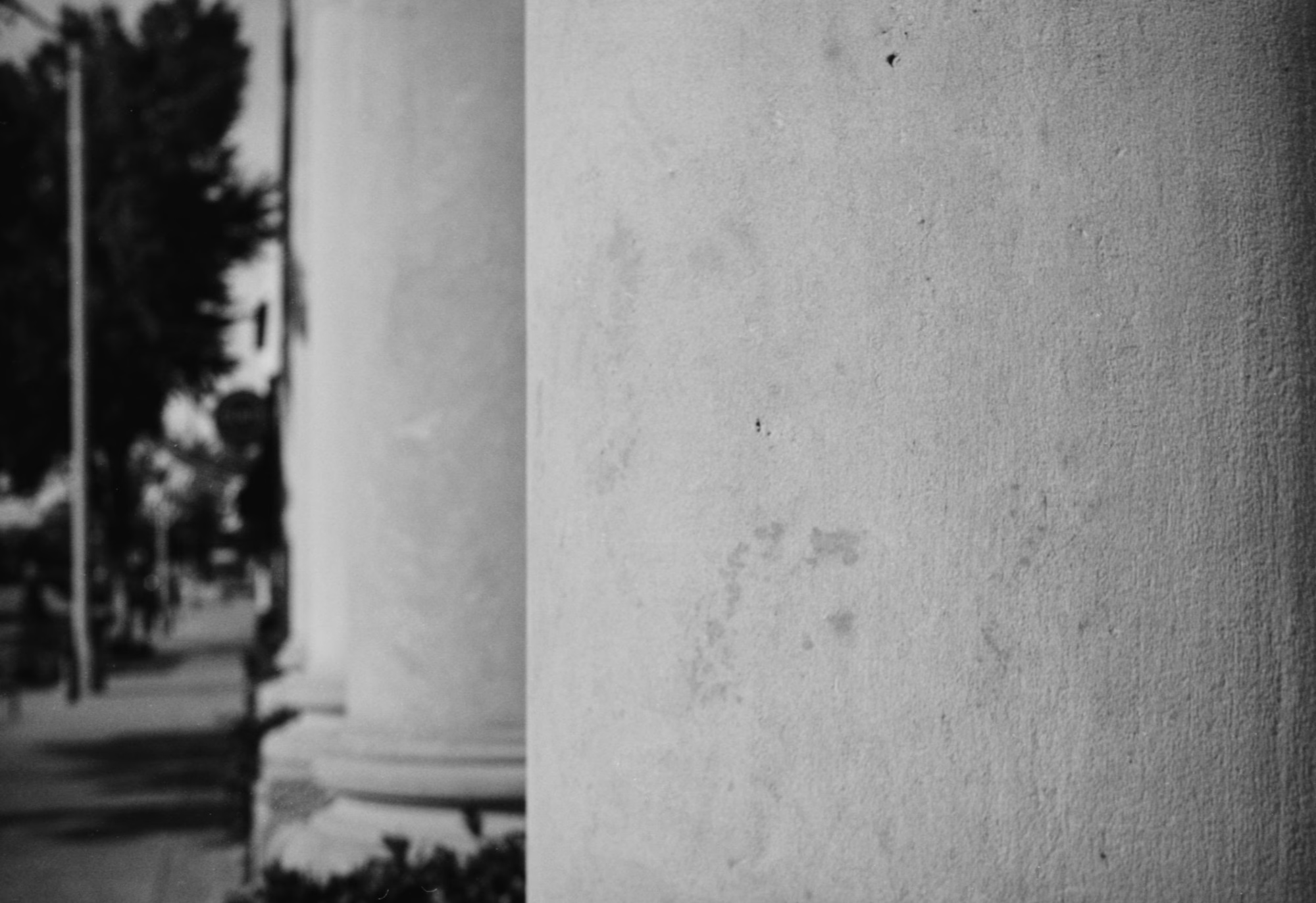
Focused close on a column, with the street falling away into soft blur. Handling: the lever wind is the best part
I’ve enjoyed shooting it. I love the lever compared to a knob, because it’s just quick. If I need to fire off several frames in a row, quick, quick, quick, a lever is what you want. I never had problems with knob-wind cameras, but if you need to shoot something in a hurry, the lever is a huge blessing.
Repairs: what to know before you buy
These cameras are a task to take apart. If you think you’re going to have to work on one yourself, the FED 4 isn’t the easiest place to start:
- FED 3, the one with the lever, is a lot easier.
- Zorki-4K is easier still than the FED 4.
- Zorkis in general can be a little less finely finished, but they’re easier to work on.
- FED 2, the original FED and the Zorki-C, the older Leica-style cameras, are all a lot easier to work on.
The first roll
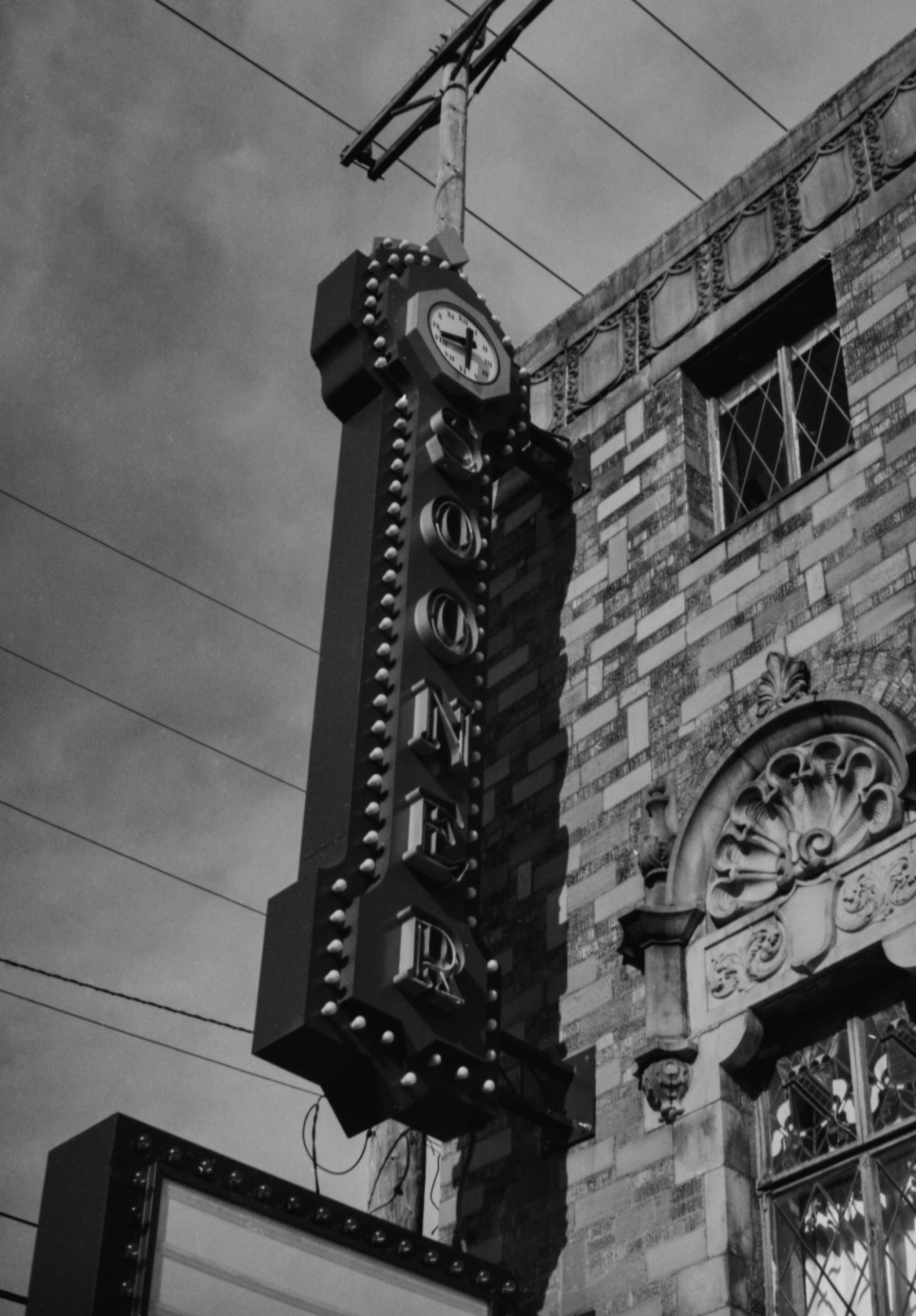
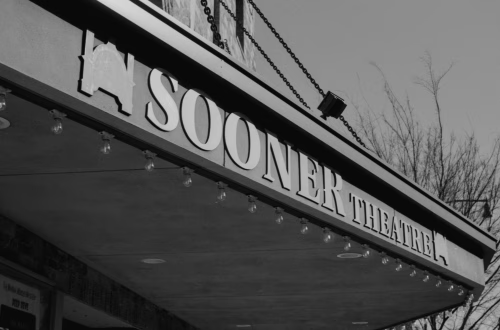
Here’s a selection from my first roll through the FED 4, shot around Norman. I’ll be putting another roll through it soon.
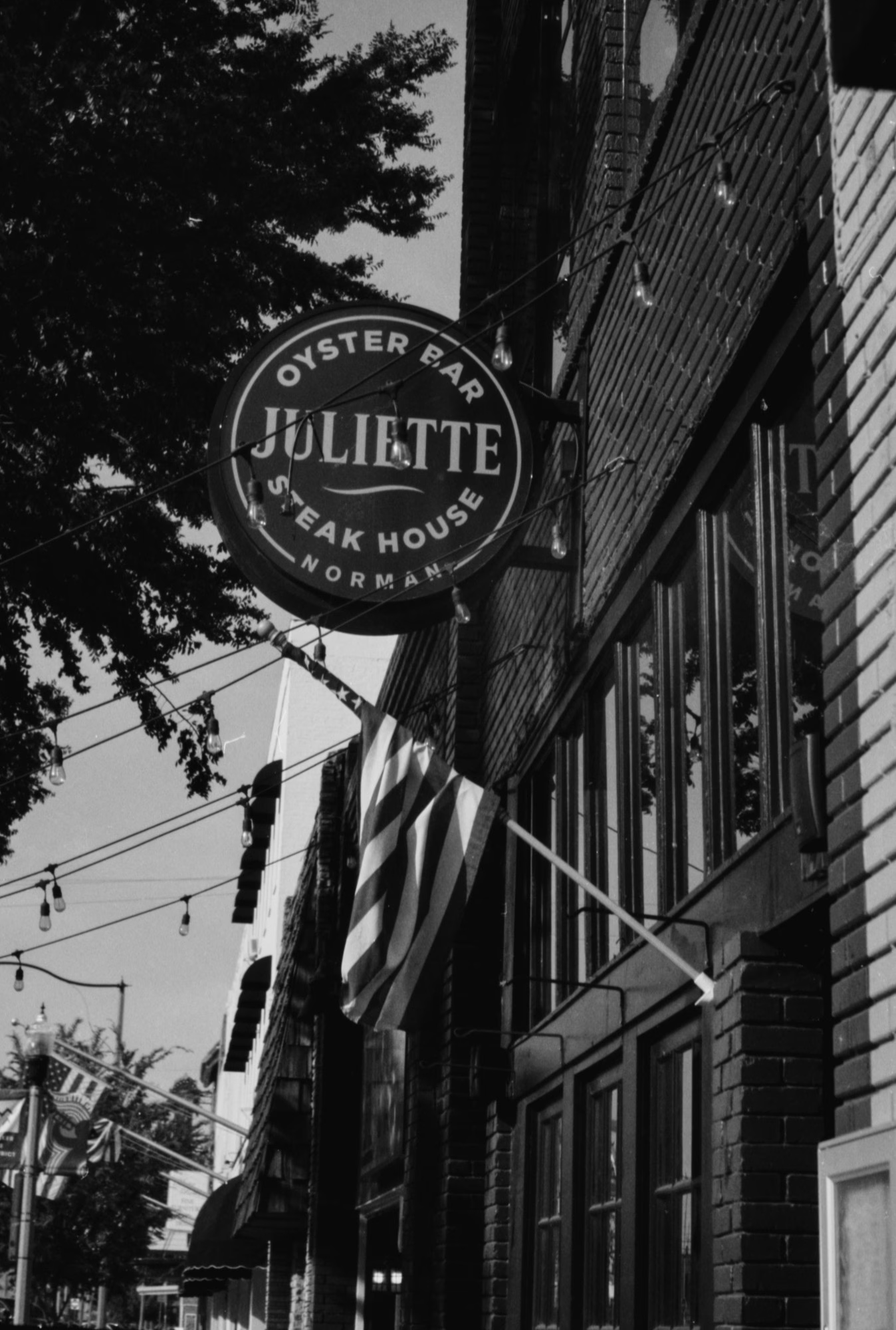
Juliette in downtown Norman. 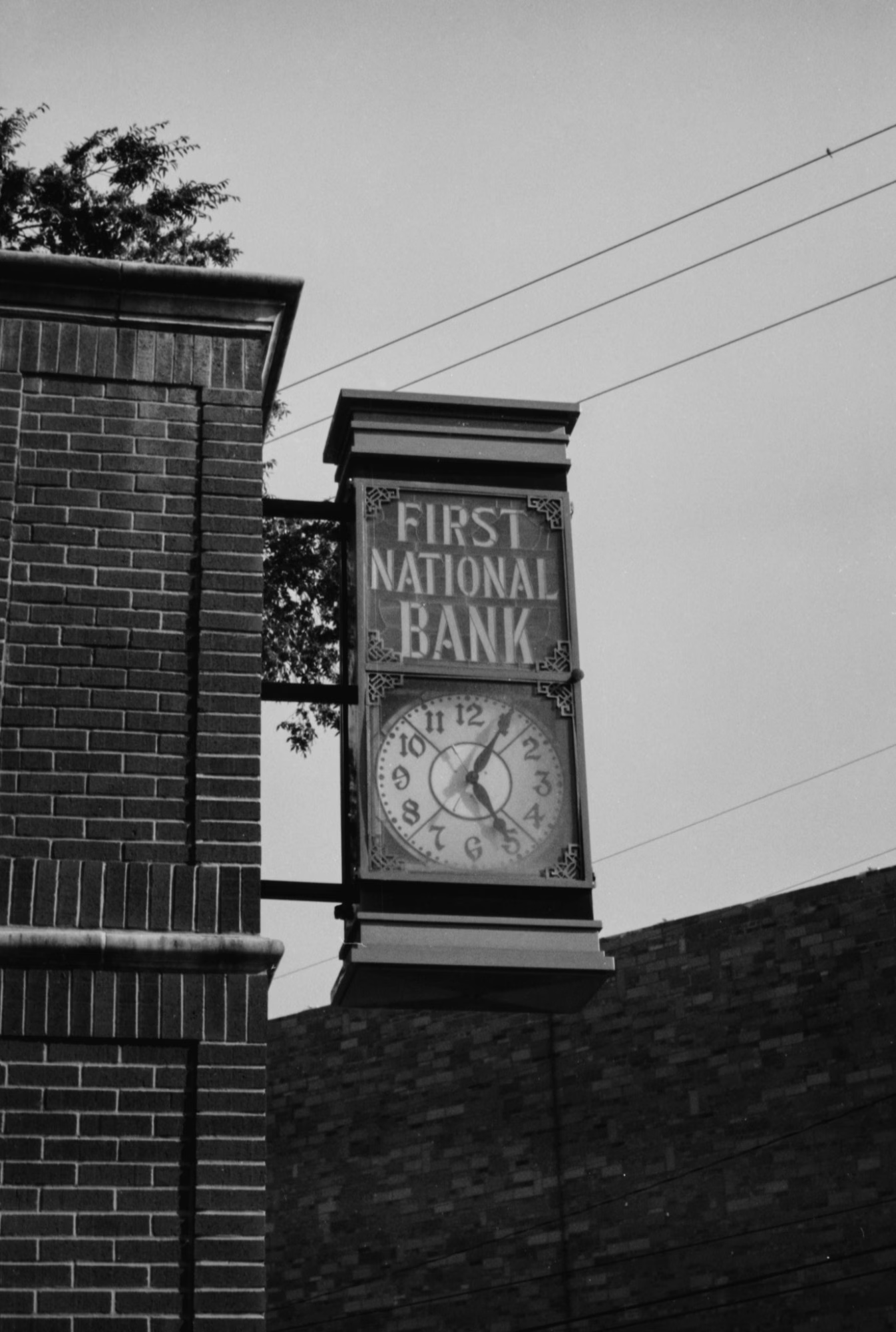
First National Bank clock. 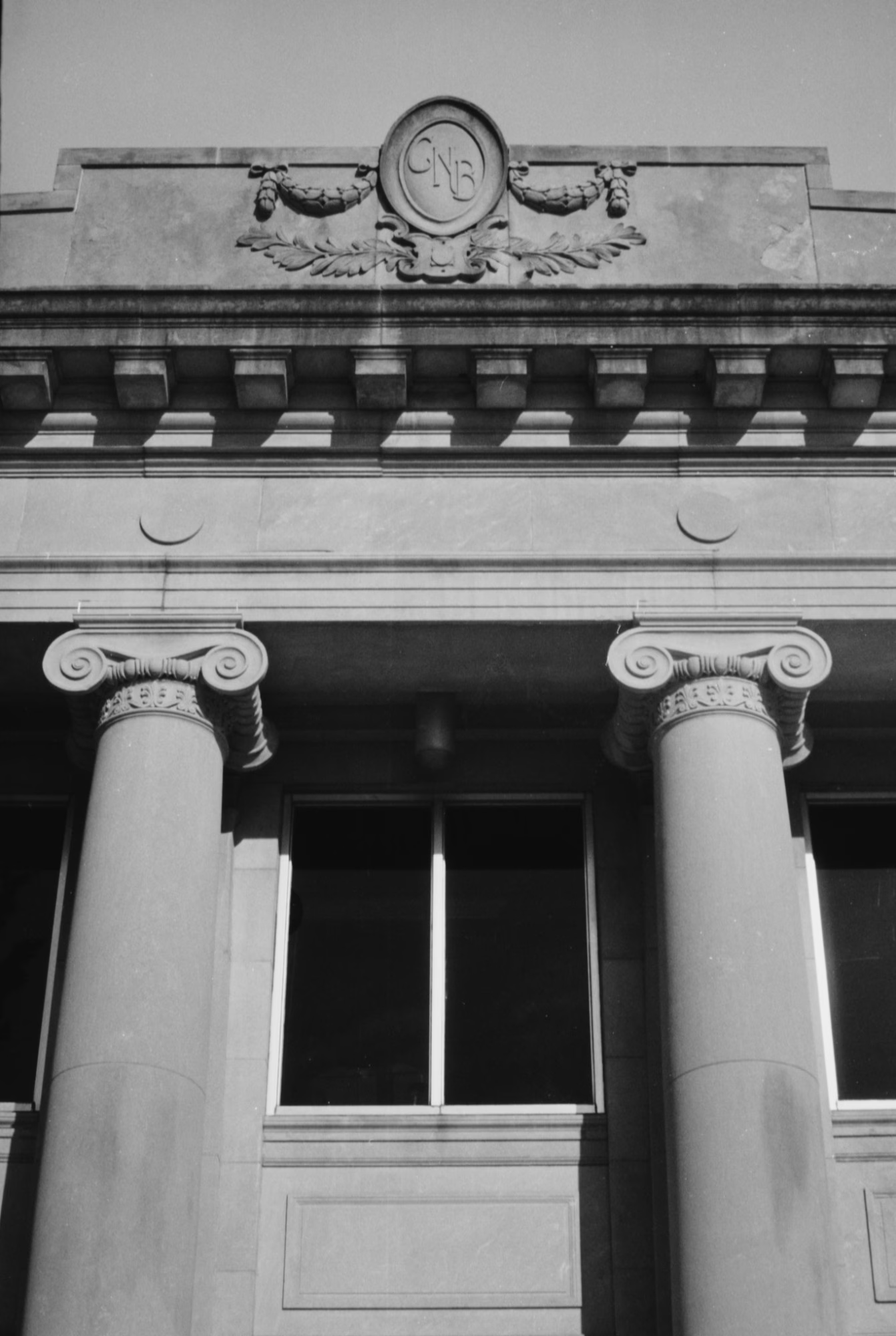
Columns and the CNB crest. 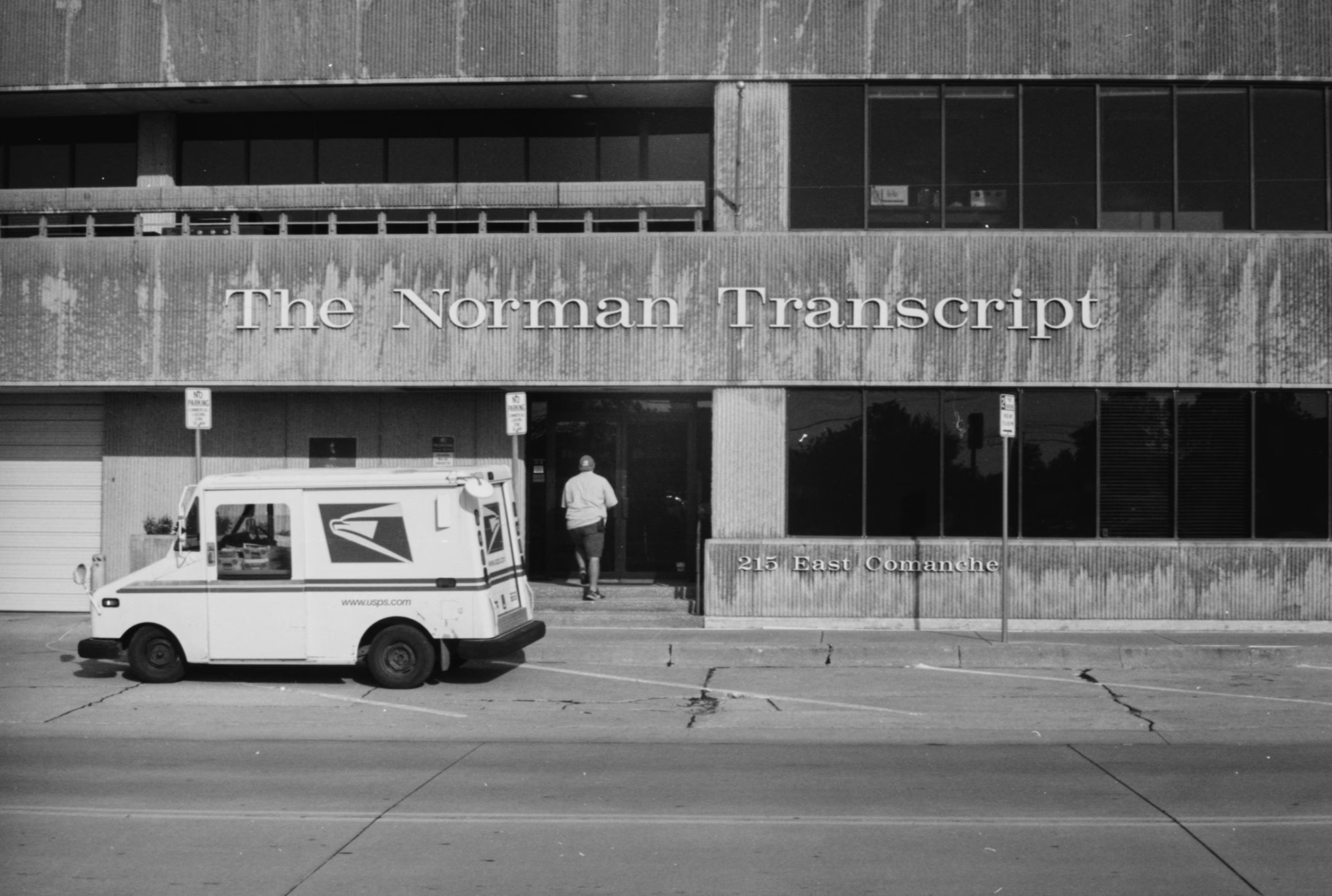
The Norman Transcript building, with the mail arriving. 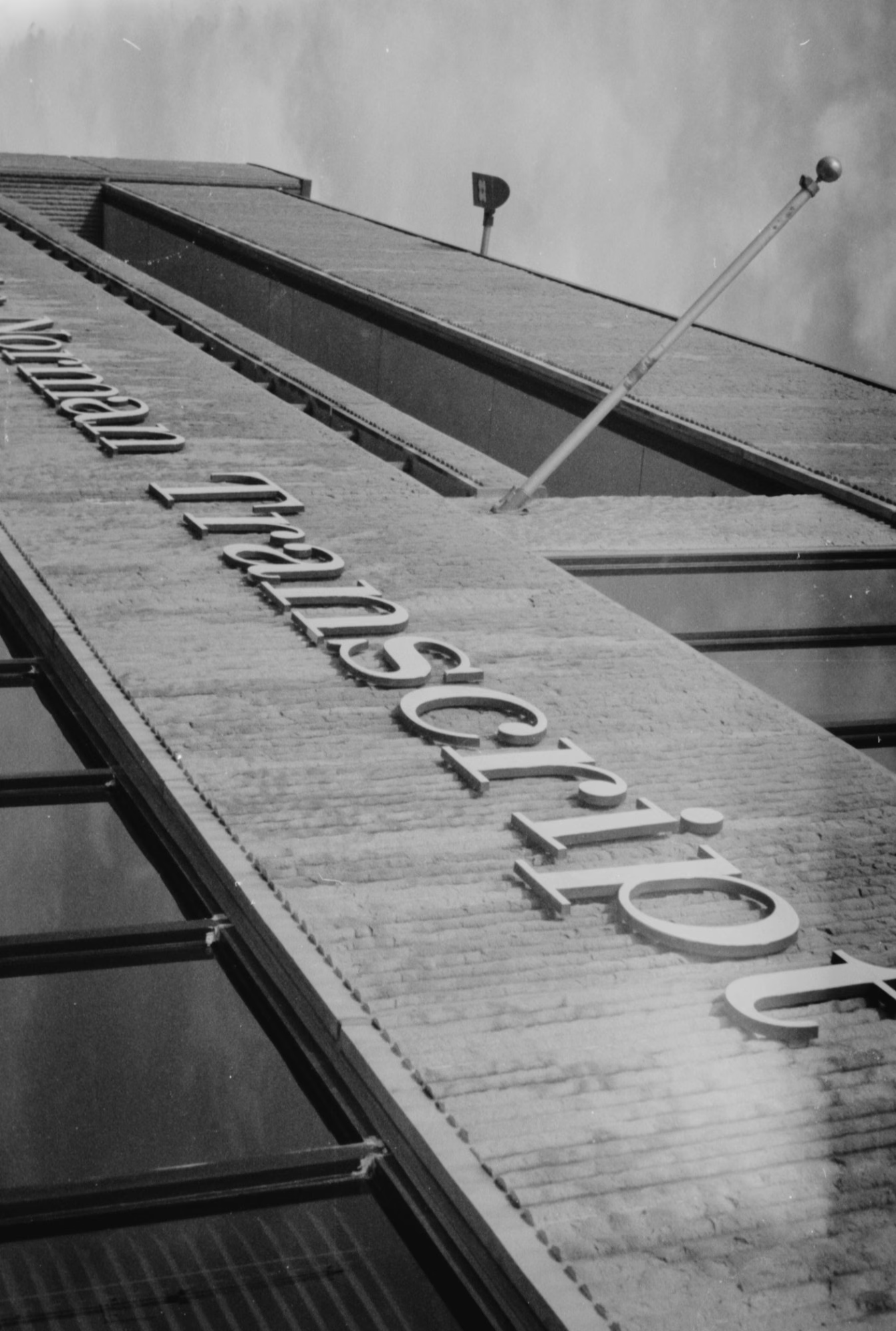
The same sign, looking straight up. 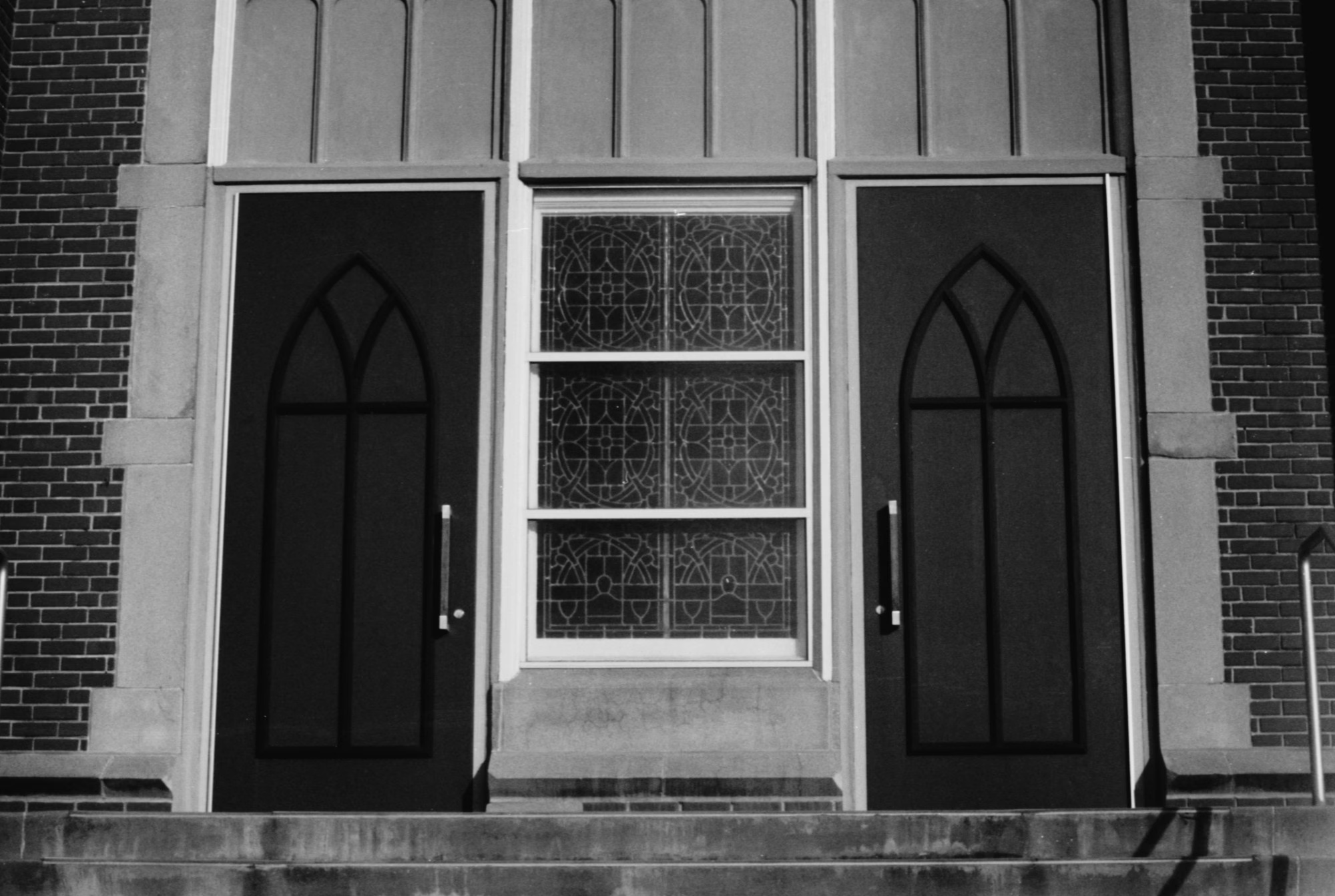
Church doors and leaded glass. 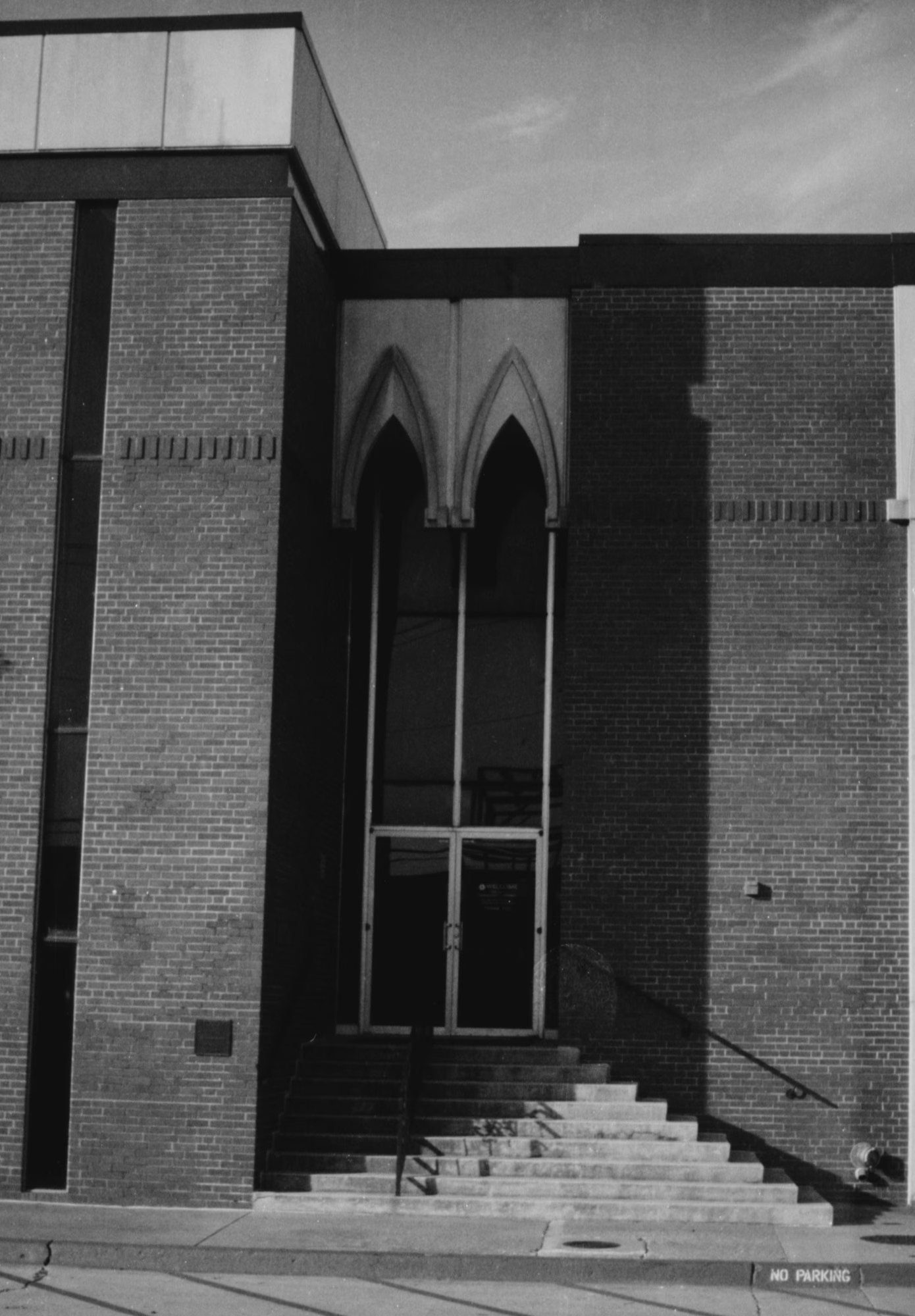
A modern take on the Gothic arch. 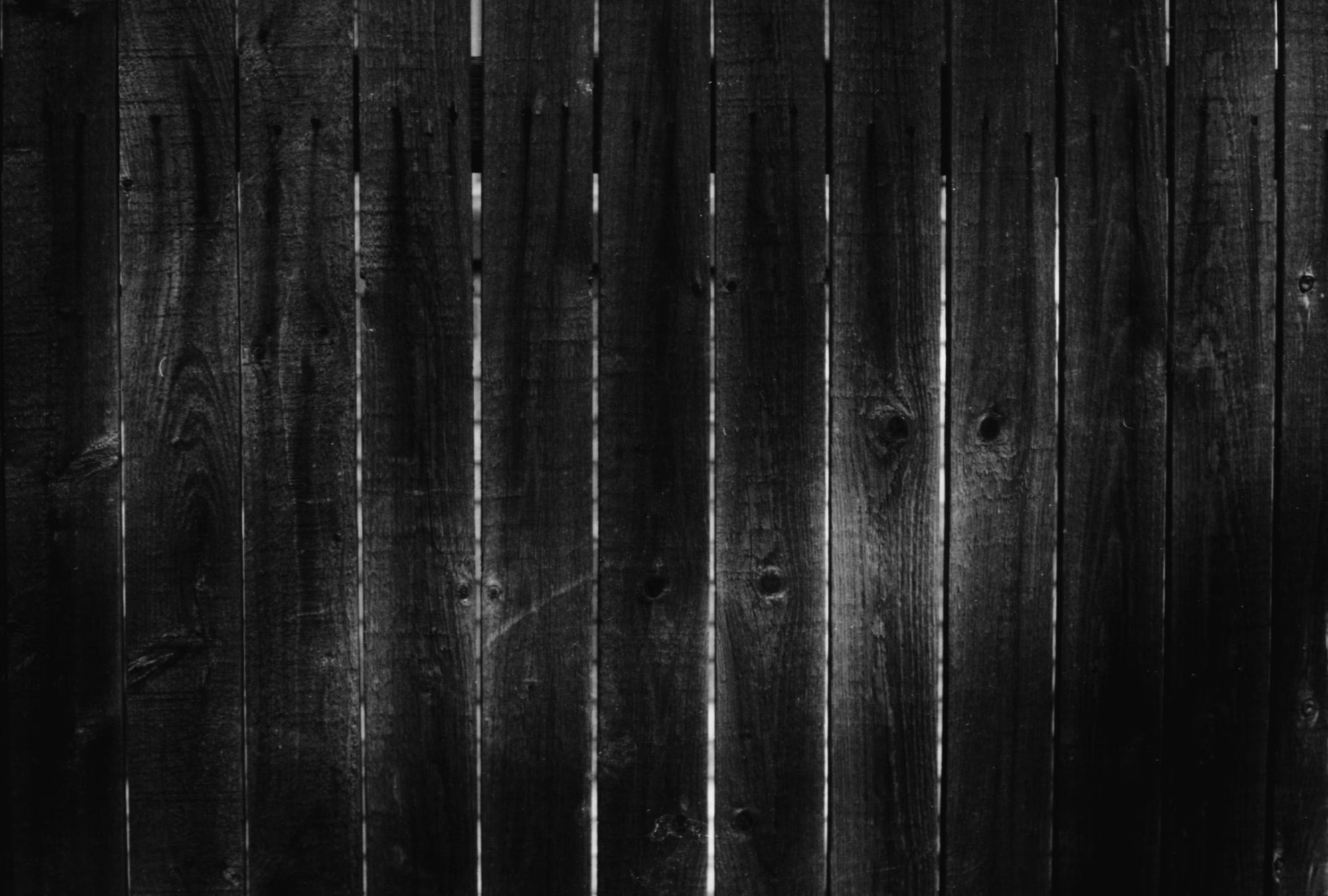
Fence boards and the light between them. 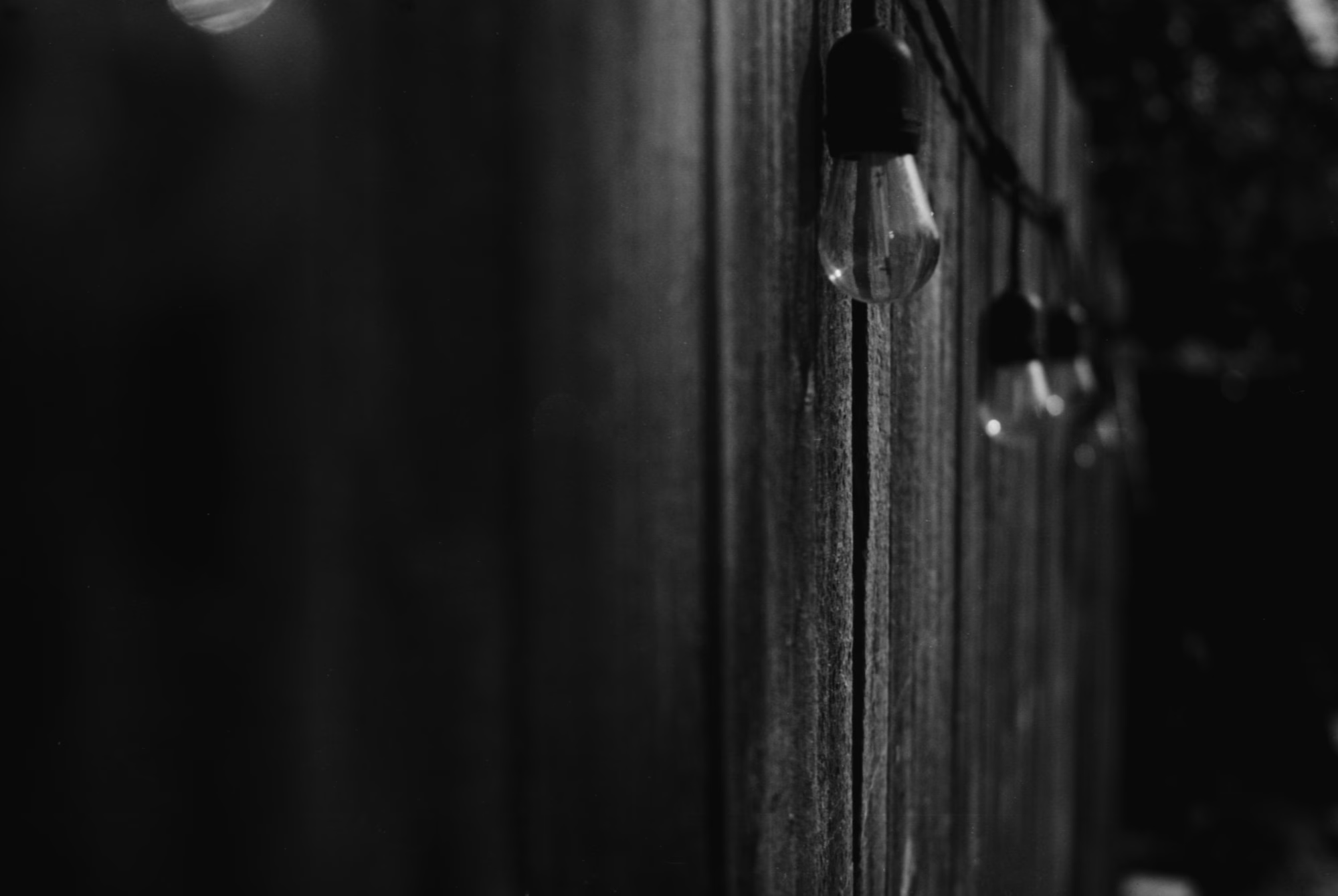
String lights on the back fence. Verdict
The FED 4 is a great camera. It took some great images, and the lever wind makes it quicker to shoot than knob-wind models like the FED 2, the FED 4a and the early Zorkis. The Industar-61’s click-stops are a real plus if you set your aperture by feel.
Go in knowing two things. The light meter almost certainly won’t help you, so bring another way to meter. And if the shutter curtain has pinholes, they can be fixed with liquid rubber and patience. Just know that the FED 4 is harder to work on than a FED 3, a Zorki-4K or the older Leica-style cameras.
Watch the video preview: FED 4 Preview on YouTube.
Sources
- FED (camera), Wikipedia
- FED 4, Camera-wiki.org
- Zorki, Wikipedia