Photography
-
Monday Jaunts Through Norman: Coffee, Chaos, and the Senses That Guide Me
Mondays have become my favorite kind of reset. While the rest of the world seems to groan its way back into the workweek, I lace up my shoes and head out for a long, slow walk around Norman, Oklahoma. There’s something deeply comforting about the familiar rhythm of these days: the aroma of fresh coffee, the distant buzz of college students stressing over exams, and the constant percussion of construction echoing through the streets.
This morning started, as so many good ones do, at Yellow Dog Coffee. I settled in with not one, but several cups, letting the rich, warm brew wake up my senses and my spirit. The place has that perfect small town coffee shop energy, friendly chatter, the hiss of the espresso machine, and just enough background noise to feel alive without being overwhelming. By the time my cousin arrived, I was properly caffeinated and ready for our weekly adventure.
He’s a young man, full of energy and in much better shape than I am these days. We set off together, stopping every so often so I could snap a few photographs along the way. I say “snap,” but for me, photography is less about perfect composition and more about capturing moments I want to remember later, textures, contrasts, and the way light feels even when my eyes don’t cooperate the way they used to. He never complains about the pauses. In fact, I sometimes wonder if he’s deliberately slowing his pace to match mine. Whether it’s kindness or just good patience, I’m grateful for it. These walks mean more to me than he probably realizes.
It was a beautiful afternoon in Norman, bright, breezy, and just windy enough to keep things interesting. The sky stretched wide and blue overhead, interrupted only by a handful of sparse clouds and the occasional crisp white contrail slicing across it. As someone who is legally blind and severely visually impaired, I’ve learned to lean heavily on my other senses during these outings. Sight might be limited, but the world still offers itself to me in vivid layers of sound, smell, and touch.
We’d pass by a tall building and suddenly I’d catch the sweet, delicate perfume of spring blossoms riding on the wind. A few steps later, the scent would shift dramatically to the sharp, unmistakable tang of urine lingering in a shadowed corner, or the heavy, skunk aroma drifting from one of the local weed dispensaries. Norman is full of these contrasts. One moment you’re breathing in the promise of new growth and Southern charm; the next, you’re reminded that every city has its raw, unfiltered edges.
And that’s okay. I love this town precisely because it can hold both truths at once. Norman is genuinely beautiful, with its friendly people, tree-lined streets, and that unmistakable college town energy that keeps it young and vibrant. The community here is warm and welcoming in a way that still surprises me sometimes. But I won’t shy away from the truth either; the good, the messy, and everything in between. That honesty, I think, is part of what makes this place feel like home.
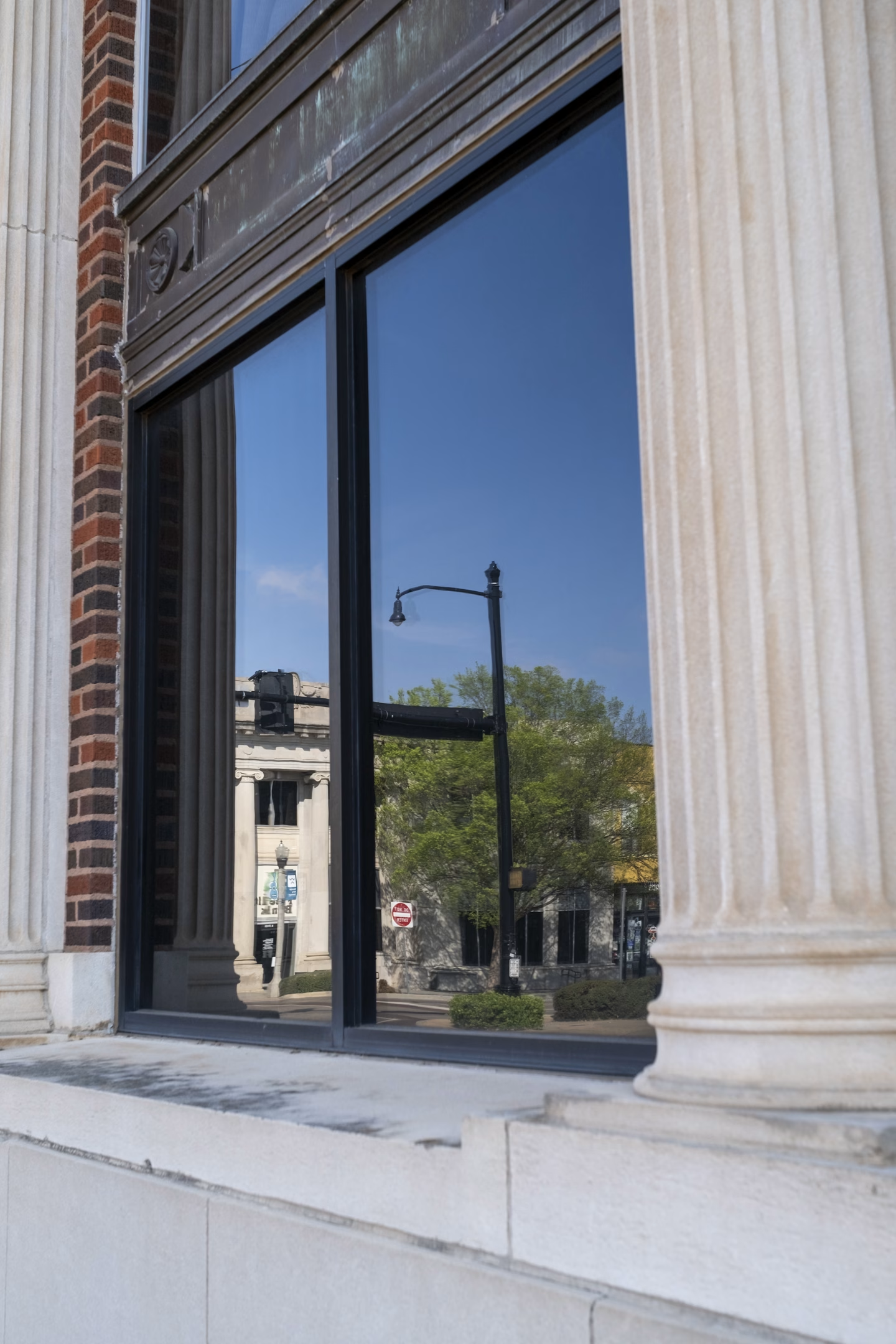
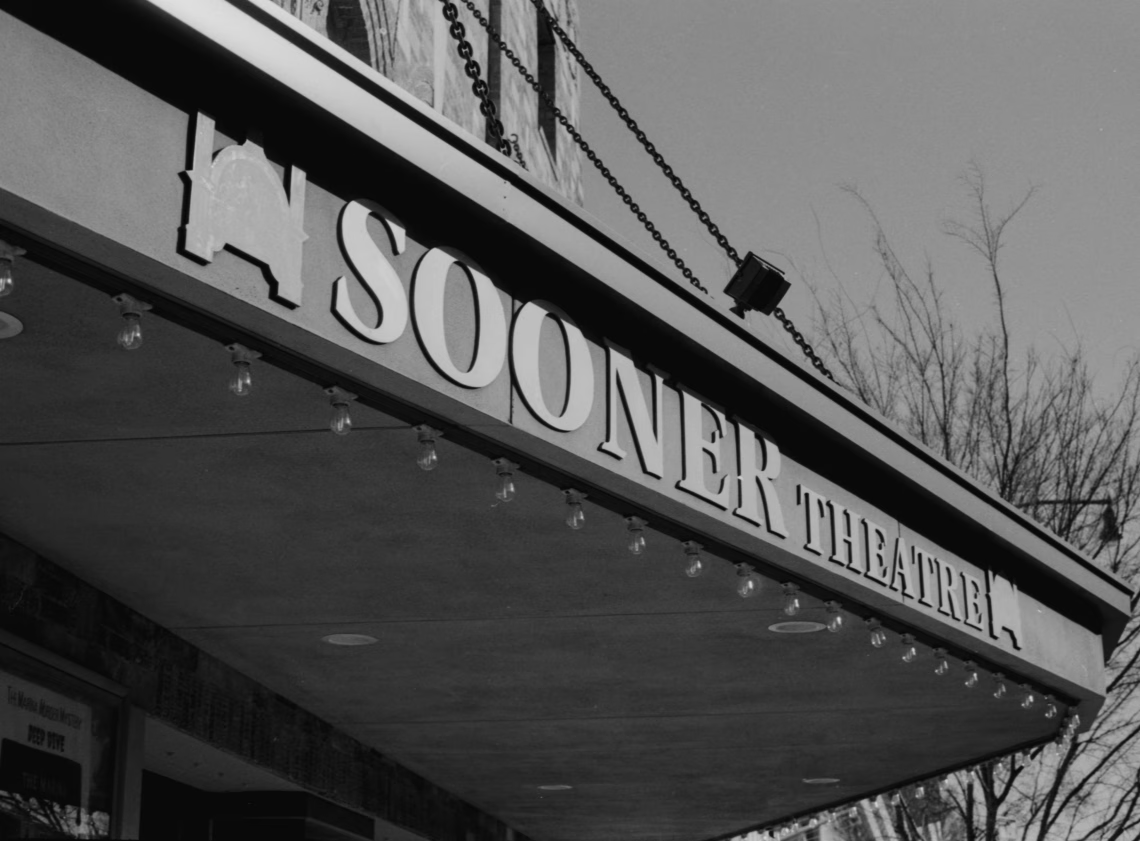
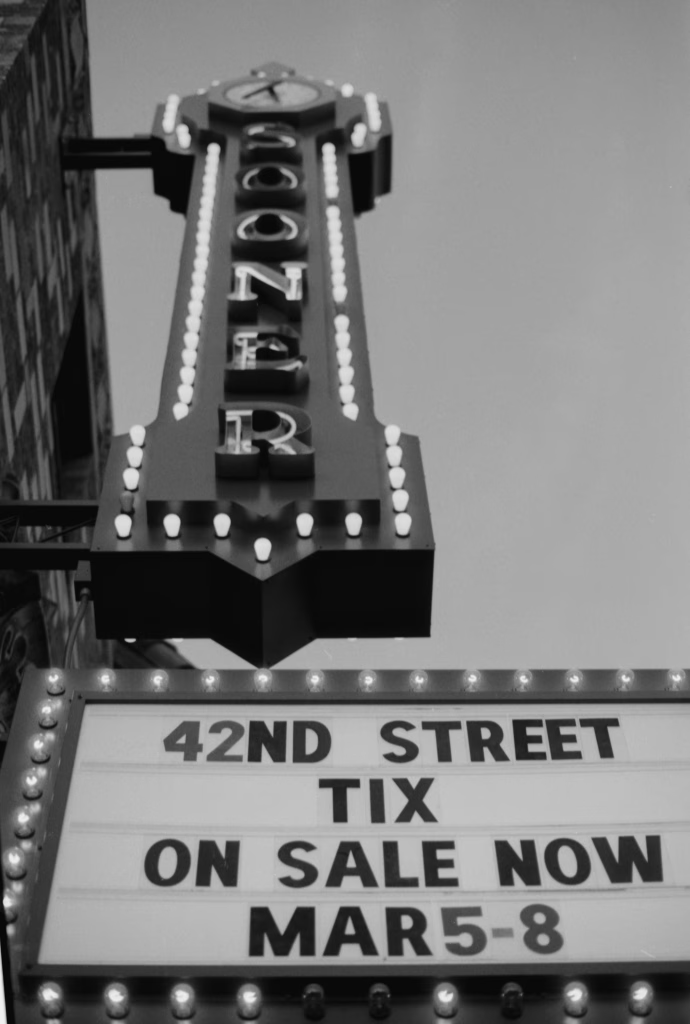
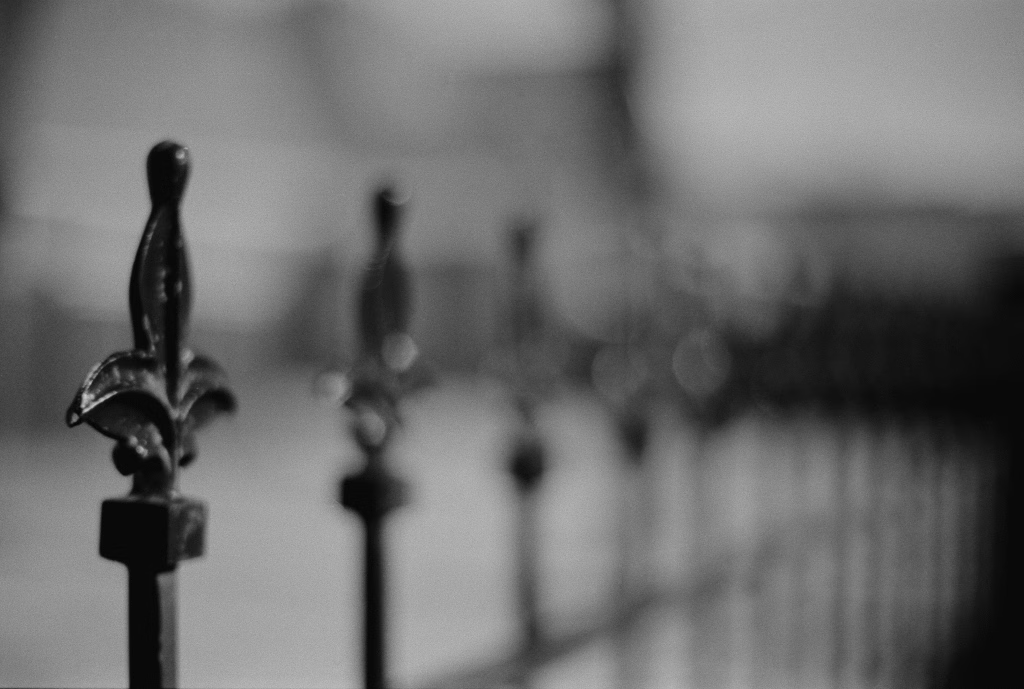
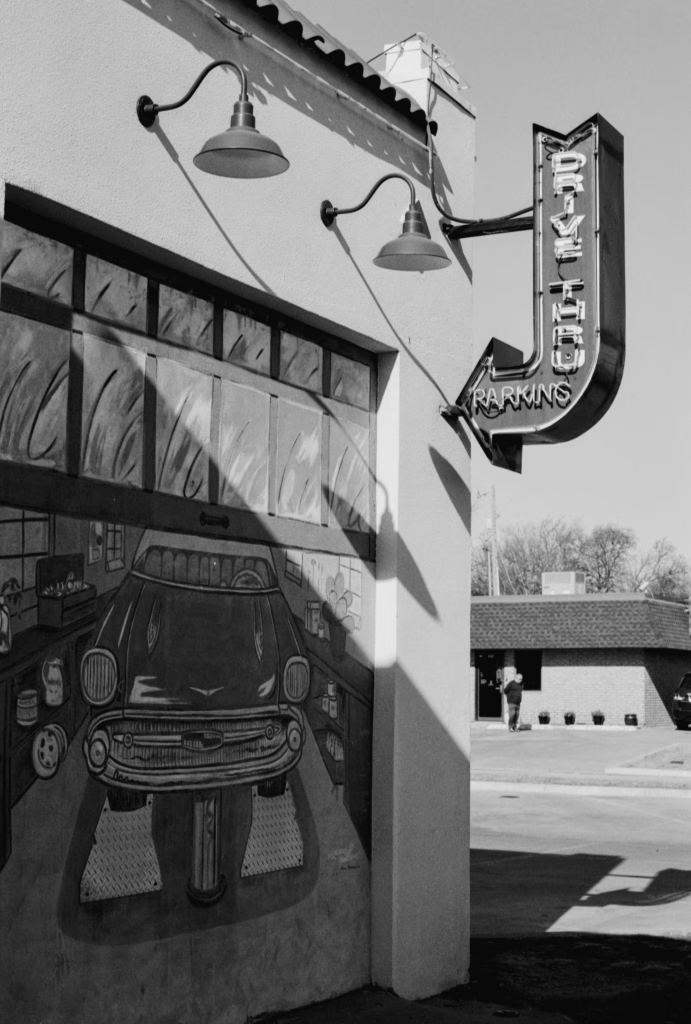
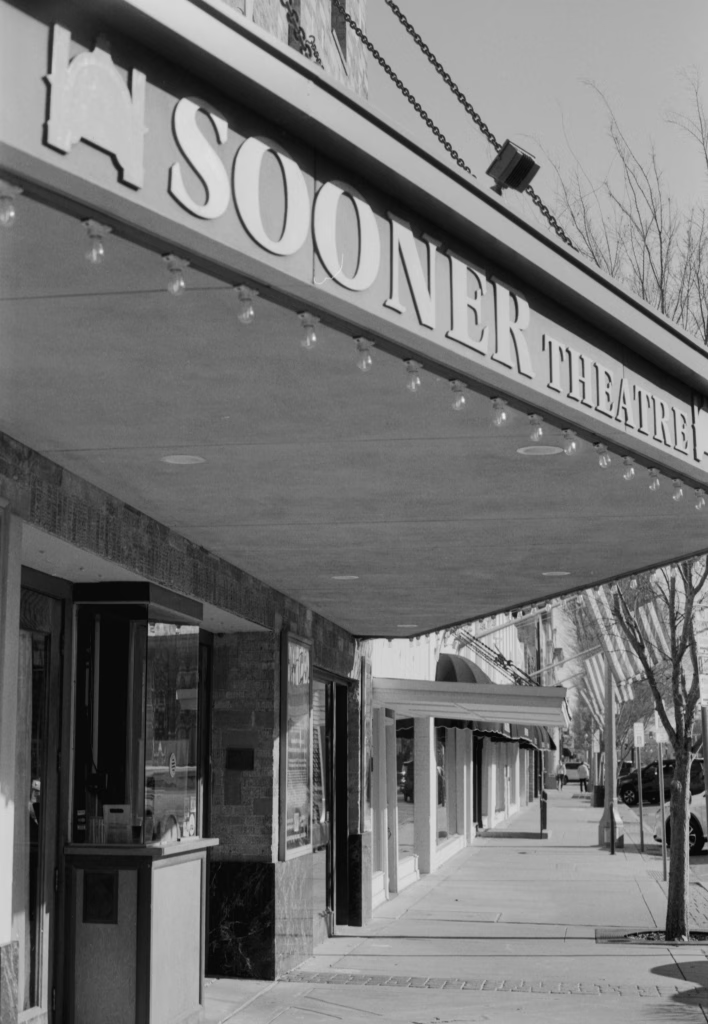
Tonight I don’t have many words left in me. The walk was long, the coffee strong, and the company excellent. Instead of more storytelling, I’ll leave you with some of the photographs I took during today’s jaunt. They may not capture every scent or sound, but I hope they give you a glimpse of the Norman I walked through this Monday.


-
Why I Chose the Fujifilm X-T4 for My Digital Photography
Over the past few weeks, I’ve been writing about the rising cost of film photography, and unfortunately, the trend hasn’t slowed down. With global instability, tariffs, silver prices, and persistent inflation, film prices continue to climb. Film photography is drifting into the territory of a luxury hobby. That’s a difficult reality to accept, especially for those of us who have relied on it as a primary creative outlet.
I don’t want photography, especially something as timeless and expressive as film, to become inaccessible. But practicality has a way of forcing decisions. For me, that meant looking for an alternative.
Some of you may remember that I previously owned a Sony A7cII. It was, in many ways, an incredible camera, compact, full-frame, and packed with modern technology. I genuinely loved using it. But after our move, I found myself back in the market, searching for something more affordable yet still capable. This time, however, I wanted something different, something more tactile, more physical in its design and operation.
My vision plays a major role in how I interact with cameras. I have about five degrees of vision in one eye and none in the other. On top of that, the vision I do have is around 20/200. That places me well within the definition of legal blindness in the United States, both in terms of acuity and visual field. In simple terms, I’m working with very limited visual information.
Because of that, the way a camera feels in my hands matters just as much as what it can do technically. Buttons, dials, and physical controls aren’t just aesthetic preferences, they’re essential. I need to be able to operate a camera through memory and touch as much as sight.
When I last searched for a camera, I came across Fujifilm’s X-T series but ultimately chose Sony for its compatibility with my collection of Minolta Maxxum lenses. This time, I revisited that decision.
I started researching the Fujifilm X-T lineup, the X-T3, X-T4 and X-T5. The X-T5, while impressive with its 40-megapixel sensor, is still relatively new and priced accordingly. The X-T3, on the other hand, is a solid performer but beginning to show its age, having been released back in 2018.
That left the X-T4.
The X-T4 strikes a balance that’s hard to ignore. It features a 26-megapixel sensor, excellent build quality, and meaningful upgrades like improved autofocus with eye tracking and a faster burst rate. More importantly, it retains the tactile design philosophy that Fujifilm is known for; dedicated dials, physical controls, and a shooting experience that feels deliberate and intuitive.
After some patient searching, I found a used X-T4 with a low shutter count for roughly half the price I had paid for my Sony. It felt like one of those rare moments where everything lines up perfectly; a professional level camera at a consumer level price.
I paired it with a few inexpensive adapters for M42, Pentax K, and Minolta mounts so I could continue using my vintage lenses. Even with its APS-C sensor, the image quality is outstanding, more than enough for my needs and far beyond what the price might suggest.
One aspect I didn’t expect to dive into was Fujifilm’s film simulation recipes. What started as curiosity quickly turned into a bit of a rabbit hole. I’ve since set up several custom recipes tailored to my preferences, and they’ve become a core part of how I shoot.
Regardless of whether I’m using film or digital, I always shoot in black and white. With my level of vision, contrast isn’t just an artistic choice, it’s a necessity. Color, while beautiful, is noise to me. It distracts more than it helps.
Contrast, on the other hand, defines the world.
I use a cane to navigate my surroundings, but when it comes to photography, contrast is what guides me. Within that narrow five-degree window of vision, everything is blurred. Without strong separation between light and dark, the scene collapses into an indistinct mass. But when contrast is present, when shadows and highlights carve out shapes, I can see. Not clearly, but meaningfully.
The X-T4 fits into that process beautifully. It’s a tool, first and foremost. I don’t pretend to use it to its full technical potential, but I use it often, and I use it with intention.
Like many visually impaired people, I rely heavily on memory. I memorize environments, layouts, and patterns. Photography is no different. I memorize my camera settings and the physical positions of the dials. I know how far to turn a knob, which direction adjusts what, and how each change will affect the image.
If I set my ISO to 160 and my shutter speed to 1/125 of a second, I can rely on muscle memory to adjust the aperture accordingly. That part becomes second nature.
What matters is the result, the ability to capture something from the world as I experience it.
The Fujifilm X-T4 has proven to be an incredible companion in that effort. It’s not just about specifications or features; it’s about how the camera fits into my way of seeing, or, more accurately, my way of interpreting what little I can see.
I’ll be putting together a long-term review in a few months after I’ve spent more time with it. For now, I can say that it has allowed me to keep creating at a time when film photography feels increasingly out of reach.
And that, more than anything, makes it worth it.
Below, I’ll be sharing some sample images from my time with the camera so far.


-
Is Film Dead or Thriving? Examining Current Trends
Like many of you, I vividly remember a time when film was the only game in town for photography, whether you were an amateur snapping family moments or a pro chasing assignments. Shooting on film meant deliberate choices: metering carefully, composing with intention, and accepting that every frame cost money and couldn’t be instantly reviewed. Then, in the mid-2000’s, digital cameras became viable options for amateurs and professionals alike. By the late 2000’s and early 2010’s, the shift was nearly complete. Digital offered instant feedback, virtually unlimited “film”, and far lower per-shot cost.
During the COVID era (roughly 2020–2022), and something unexpected happened: film experienced a genuine resurgence. Stuck at home, many people sought tactile, meaningful hobbies. Loading a roll, advancing manually, and waiting for development felt like a rebellion against endless screen time. I dusted off my old film cameras, started shooting again, and even set up a home darkroom. The same wave lifted vinyl records back into mainstream popularity, both analog formats offered an “essence” and grounded, earthly feel that digital files (just streams of 1’s and 0’s) simply can’t replicate for everyone.
Film’s magic lies in its imperfections and process. That grain, those subtle tonal shifts, the way light interacts with emulsion, it’s organic in a way pixels aren’t. Everyone who calls themselves a photographer should try film at least once: learn to meter by hand, understand reciprocity failure, and master the full workflow, including developing your own negatives.
Personally, I love pushing Arista EDU 400 to 800 or even 1600 in low-light situations, then developing in 510-Pyro to retain fine grain while squeezing out every stop of sensitivity. These decisions happen before you even press the shutter. It’s a thoughtful, premeditated craft that forces discipline.
I’m not a film snob. Digital is incredibly convenient: walk into a dim building, crank the ISO, and keep shooting without a second thought. No waiting for processing, no risk of light leaks or bad chemistry. For pros needing speed, volume, or client turnarounds, digital remains king—and rising film costs have pushed many back that way.
Recent trends show the resurgence has cooled somewhat. Sales boomed during the pandemic but appear to be flattening or stabilizing into a dedicated niche rather than explosive growth. The market remains healthy as a niche. Global photographic film sales exceeded 20 million rolls in 2023 (up 15% from 2022), with production ramping up (Kodak and Fujifilm increased capacity by around 20% in recent years to meet demand). Black-and-white film saw solid gains (10% shipment increase in some reports), and instant film surged in places like Asia-Pacific.
Prices tell a different story, especially for color film. Kodak and other manufacturers have raised prices multiple times since 2023, with increases of 10–25% in some cases, and more hikes announced or implemented in 2025–2026 (some reports cite 20–50% jumps for certain stocks due to raw material costs like silver, which spiked dramatically in 2025).
Average U.S. film prices rose about 9% from early to mid-2025 after a brief dip in 2024. Premium emulsions like Portra or slide films have climbed noticeably, while some black-and-white options (like Tri-X) have stayed more stable or even seen temporary reductions.
As an American, I’d love to shoot Kodak exclusively. It’s iconic, reliable, and made here. Kodak has made positive moves: resuming direct distribution of consumer stocks like Gold 200 and Ultramax 400 (after more than a decade through third parties), introducing new/rebranded options like Kodacolor 100/200, and taking greater control to stabilize supply and pricing. They’ve also expanded professional lines and boosted motion-picture film sales (higher than since 2014 in some years). I hope this extends fully to TMax black-and-white films, potentially lowering prices through better distribution and reduced middlemen.
So, is film dead? Absolutely not. It’s evolved from the default medium to a cherished, intentional alternative like vinyl in music. The “end of an era” might refer to film’s dominance, but we’re in a new one: a vibrant niche supported by enthusiasts, artists, educators, and even some pros who mix formats. Film won’t reclaim the mass market, but it doesn’t need to. As long as manufacturers like Kodak, Ilford, and Fujifilm keep producing, labs keep developing, and people keep loading rolls, analog photography endures.
What about you? Do you shoot film regularly, or has the price creep pushed you more toward digital? Have you noticed changes in availability or costs lately? I’d love to hear your thoughts in the comments, whether you’re a die-hard analog shooter or someone who’s curious to try it.
-
Common Blind Questions Answered: My Journey
What It’s Really Like to Be Blind: Honest Answers from Someone Living It
Have you ever paused to truly wonder what life is like without sight? As someone that’s legally blind with five degrees of residual vision in my right eye, I’ve heard these questions countless times. I only became legally blind about a year ago, so I straddle both worlds: the sighted one I knew for most of my life and the blind one I’m navigating now.
In this post, I’ll share straightforward, personal answers to the most common curiosities about blindness, drawing from my experiences and conversations with friends in the community. My goal? To dispel myths, highlight realities, and show that blindness is a spectrum of adaptation, not limitation.
Do Blind People Blink?
Yes, we do. Blind people have eyes (real or prosthetic), and blinking is a natural reflex to keep them lubricated and free of debris. Sight has nothing to do with it; it’s basic eye physiology.
Do Blind People Dream?
Dreams are highly individual and depend on when (and if) someone lost their vision. People blind from birth often don’t have visual dreams at all. Research shows that congenital blindness means the brain doesn’t develop the same visual processing pathways, so visual imagery in dreams is rare or absent.
For those like me that had full vision for decades and only recently became legally blind, dreams remain crystal-clear, often in perfect 20/20 detail. Many of my blind friends who’ve been without sight longer report no visual elements in their dreams anymore; visual memory fades over time, and dreams shift to rely on other senses. It’s fascinating how the brain adapts.
Can a Blind Person See Anything?
Blindness isn’t all or nothing, it’s a wide spectrum. Legally blind covers a range from severe low vision to total blindness. The common claim is that only about 10% of legally blind people have no light perception at all (complete darkness, or rather, no visual input whatsoever). In my experience and from what I’ve heard, the number of people in total, absolute blindness (no light sense) is even lower, perhaps closer to 5% or less in many cases. Most people labeled “blind” retain some light perception: they can tell light from dark, notice bright sources, or even see vague shapes or contrasts. Those blind since birth often still sense light in subtle ways. The idea of “seeing nothing but black” is a myth; many experience no visual field at all, complete absence rather than darkness.
How Do Blind People Read?
Accessibility tech has revolutionized reading for us. Screen readers turn text into speech or braille output:
iPhones dominate in the blind community thanks to VoiceOver. It’s intuitive, powerful, and widely loved for seamless navigation.
Macs use VoiceOver, too.
Windows machines in the workplace often run JAWS (a paid screen reader) or the free, NVDA.
For tactile reading, braille displays are invaluable. They range from compact 20-cell models (like the NLS eReader for basic use) to advanced 40-cell ones (like the HIMS Braille eMotion). I rely on mine daily to read texts, emails, books, and articles. It’s direct, private, and fast. Braille isn’t dying; it’s evolving with refreshable displays that pair with phones and computers.
How Do Blind People Navigate the World?
Getting around is a mix of mental mapping, sensory awareness, and technology. I memorize routes: how many steps to the end of my street, which direction to turn at corners. Sounds are huge, traffic flow, echoes off buildings, audible pedestrian signals at crosswalks. I absorb a ton of environmental info without visual clutter.
Apps like Apple Maps with VoiceOver are game-changers: spoken directions, precise distance announcements, and haptic vibrations guide me turn-by-turn. Guide dogs, white canes, and orientation & mobility training help too. It’s about building reliable systems—once a route is learned, it’s second nature.
Do Blind People Have Better Senses?
No, this is a persistent myth. Our hearing, smell, or touch aren’t superhuman. We don’t magically gain enhanced senses. What changes is attention: without visual input dominating, we tune in more deeply to audio cues, vibrations, scents, and textures. My hearing is not great, but I pick up on subtle footsteps or air shifts when someone approaches because I’m not distracted by sights. It’s focus and practice, not biology.
How Do Blind People Cook or Shop?
Daily tasks like cooking become routine with adaptation and tools. Mornings, I often make my wife scrambled eggs: crack carefully (shells are the enemy), stir, melt butter, and gauge doneness by sound (sizzle changes), spatula feel, and timing from our specific stove setup. I’ve cooked eggs forever, so muscle memory kicks in. Instant Pots are lifesavers. Set timers and walk away. Helpful gadgets include talking thermometers, liquid level indicators (beeps when coffee reaches the rim), and cut-proof gloves for safe chopping.
Shopping? Online ordering handles most needs conveniently. In-store, Meta smart glasses read labels aloud and describe surroundings (aisles, products, signs)—tech like this boosts independence dramatically. It’s empowering.
Do Blind People Work?
Yes, and many excel in diverse fields: teaching, law, programming, entrepreneurship, counseling, and beyond. Assistive tech levels the playing field when workplaces embrace it.
That said, employment challenges are real and frustrating. Statistics vary by source and definition, but recent U.S. data (from places like the American Foundation for the Blind and National Research & Training Center) show employment-population ratios around 40-50% for working-age people with visual impairments, far below the 75-80% for those without disabilities. The true “unemployment rate” (among those in the labor force actively seeking work) is often around 8-10%, double the general population’s. However, a large portion (sometimes over 40%) aren’t even in the labor force. Older or outdated claims of “70% unemployed” often misapply stats by including everyone not working, not just the job-seeking unemployed.
Underemployment is huge as well, many capable blind people end up in part-time or lower-level roles. Why? Assistive tech (screen readers, braille displays, specialized software) can cost thousands upfront. Small businesses can’t afford the expense; larger ones hesitate over accommodations.
Vocational rehabilitation programs exist in every state, but outcomes vary. Some lead to fulfilling careers, others to low-pay box assembly jobs.
Blind people aren’t lacking intelligence or drive. In my biased view, the blind people I know are among the sharpest, most resilient, and wisest people out there. We’ve adapted to a world not built for us.
Stigma lingers: entering a coffee shop or store, I sense the stares, the awkward silences. But that’s okay, awareness changes minds. Technology advances daily: AI, better apps, inclusive design. All we ask is opportunity, a fair shot to contribute.
If this post sparked curiosity or shifted your perspective, that’s the win. Blindness reshapes life, but it doesn’t define it. We’re capable, creative, and ready when given the chance. Got more questions? I’m here to talk.
-
Capturing Moments with Minolta’s 50mm f/1.4 Lens
Recently, I discovered a Minolta 7000i with a 50mm f/1.4 lens for the price of a cup of coffee and a bagel. The lens is worth far more than the camera, making this an incredible find for any photography enthusiast. I had one of the cameras already, but I gave it to a friend who needed it more and found myself in search of a replacement auto-focus Minolta Maxxum camera for my various lenses. This particular camera came with an amazing lens, the infamous 50mm f/1.4, known for its versatility and rich image quality. The camera arrived a few weeks later. After some cleaning and a new battery, it worked perfectly, like new, showing no signs of its vintage age.
Eager to test it out, I grabbed a roll of Kentmere 100 and headed out to take some test shots that you can see below, relishing the feeling of anticipation that comes with trying out new gear. Please reference my previous post about being a blind photographer, which explores the unique challenges and joys I experience in this creative pursuit. The next day, I finished off the roll and developed it in 510Pyro, a process that I have honed over time, pushing the boundaries of what is possible. A blind guy developing film? Yes, I do that, too! It’s a testament to the power of dedication and the love for my craft, as I navigate the world of photography in my own unique way.
The next morning, I started scanning the film and was genuinely happy with the results, feeling a rush of satisfaction as each image came to life on my screen. The Minolta Maxxum 50mm f/1.4 lens provided amazing results both at infinity and close up, allowing for a range of creative expression that I didn’t think was possible until I experienced it firsthand. The bokeh was buttery smooth, just as expected, adding a professional touch to my photographs that elevated them beyond the ordinary. Due to it being such a fast lens, it focuses quickly, even in darker environments, enabling me to capture fleeting moments without hesitation.
What say you?