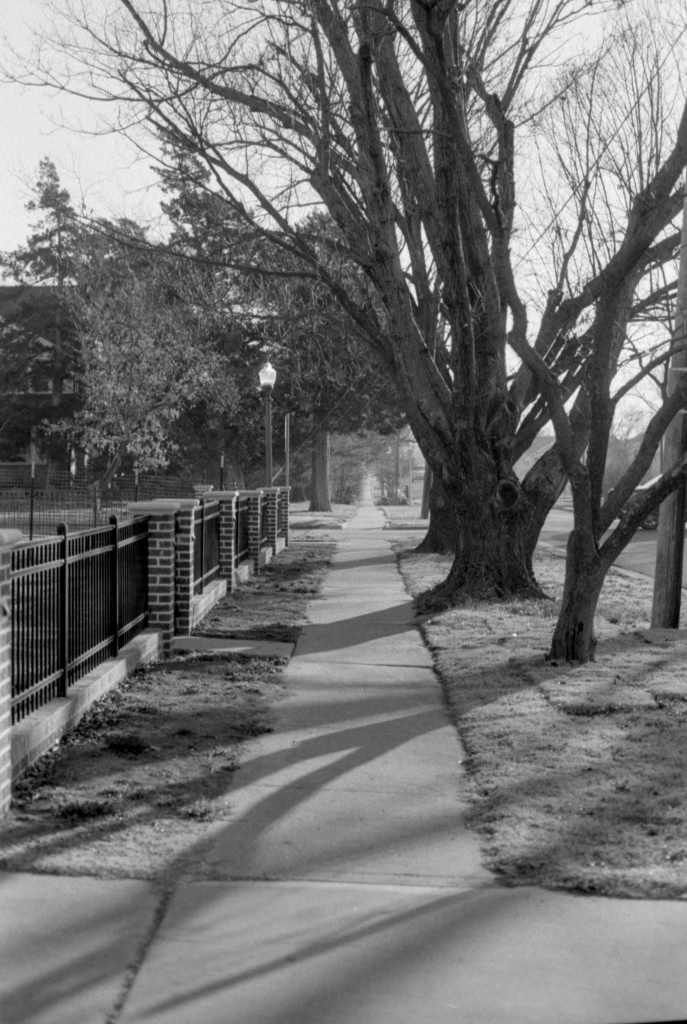
-
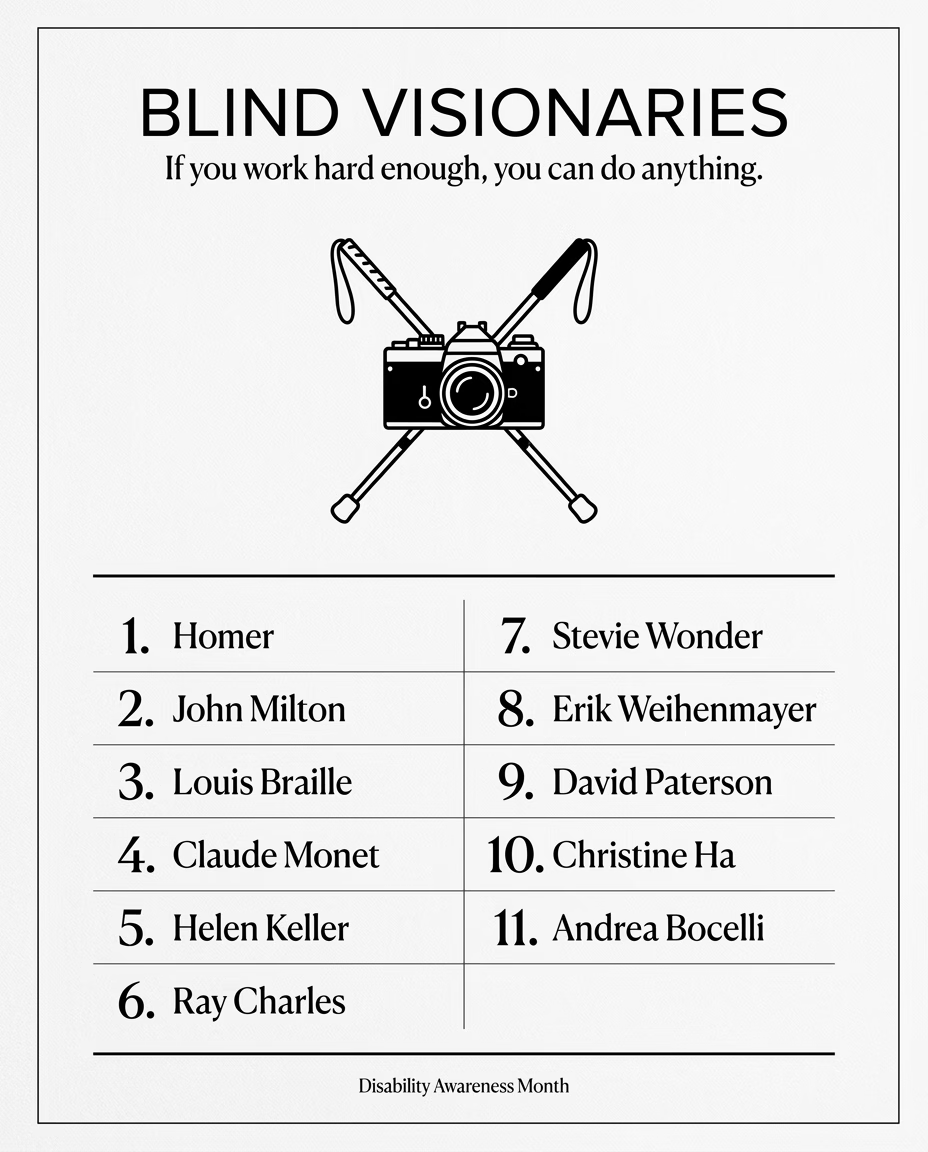
Blind Visionaries: 11 People Who Proved Sight Isn’t the Same as Vision
Disability Awareness Month
There’s a lazy assumption baked into the English language itself: that “vision” means eyesight, that “seeing” means understanding, that “insight” requires a working pair of eyes. The people on this list spent their lives quietly, sometimes loudly, disproving that assumption. They didn’t succeed despite being blind so much as they succeeded as blind people, full stop, doing the work in front of them until the work was undeniable.
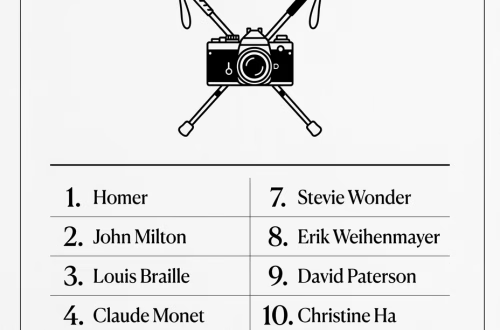
Homer (c. 8th century BCE) Ancient tradition holds that the poet credited with the Iliad and the Odyssey, two works that shaped Western literature for the next 2,800 years, was blind. Whether or not that’s literal history, “Homer” became an archetype: proof that the tradition of blind storytellers is as old as storytelling itself.
John Milton (1608–1674) Milton was already a respected poet and pamphleteer when he went completely blind in his mid-40s. He didn’t stop writing, he dictated Paradise Lost, one of the greatest epic poems in the English language, line by line to his daughters and assistants.
Louis Braille (1809–1852) Blinded in a childhood accident, Braille spent his teenage years at the Royal Institute for Blind Youth in Paris developing a tactile reading and writing system based on raised dots. He was 15. That system still bears his name and still opens up literacy for blind people worldwide.
Claude Monet (1840–1926) Cataracts crept in during Monet’s 60s, and by his early 80s he was legally blind, seeing the world through a yellow-brown haze that reshaped his palette entirely. He kept painting anyway — the massive, immersive Water Lilies murals now in the Musée de l’Orangerie were largely completed while his sight was failing.
A personal aside on this one. I’m severely visually impaired myself, and I still pick up a camera most days. So I’ll admit I have a soft spot for Monet that goes beyond the history books. When I put my eye up to the viewfinder now, I can’t just look and see. I have to scan the frame left to right, top to bottom, like a printer laying down a page, and hold each piece in my mind until I’ve stitched together something like a true picture of the scene — blurry, incomplete, but true. It takes time. It takes patience. Most of the critics who write about Monet’s late work talk about it like a tragedy that happened to a genius — the poor man, painting through the fog. I don’t read it that way. I think he was doing the same thing I do at every viewfinder: piecing together a whole scene from a vision that only gives you fragments at a time, and trusting the patience of that process instead of quitting because his eyes weren’t what they used to be. I don’t think you can fully understand that decision until you’ve had to make something honest out of a blurred, partial view of the world.
Helen Keller (1880–1968) Deafblind from infancy after an illness, Keller learned to communicate through her teacher Anne Sullivan and went on to graduate from Radcliffe College, write a dozen books, and become one of the most influential advocates for disability rights, women’s suffrage, and workers’ rights of the 20th century.
Ray Charles (1930–2004) Blind by age seven from glaucoma, Charles built a career that fused gospel, blues, jazz, and country into something entirely his own and in the process became one of the most influential musicians in American history.
Stevie Wonder (b. 1950) Blind since shortly after birth, Wonder was a Motown prodigy by age 13 and has since won 25 Grammy Awards, written some of the most enduring songs of the 20th century, and remained a fierce advocate for accessibility and civil rights.
Erik Weihenmayer (b. 1968) Blind since age 13 from a rare eye disease, Weihenmayer is the only blind person to reach the summit of Mount Everest, and he didn’t stop there, going on to complete the Seven Summits and kayak the length of the Grand Canyon.
David Paterson (b. 1954) Legally blind since infancy due to an infection, Paterson built a career in New York state politics and became Governor of New York in 2008, the first legally blind person to serve as a U.S. governor.
Christine Ha (b. 1979) Ha began losing her vision in her 20s to a rare autoimmune condition, right around the time she was falling in love with cooking. In 2012 she became the first blind contestant and winner of MasterChef US, and later opened her own celebrated restaurant, The Blind Goat, in Houston.
Andrea Bocelli (b. 1958) Born with poor eyesight and blinded completely at age 12 after a soccer accident, Bocelli went on to become one of the best-selling artists in music history, bringing opera to audiences who’d never have sought it out otherwise.
None of these people were handed anything. They read by dots under their fingertips, or dictated a masterpiece word by word, or cooked by touch and smell in front of judges who doubted them, or climbed a mountain that kills people who can see just fine. The through line isn’t blindness, it’s the refusal to let blindness be the whole story.
That’s the point of this list, and it’s the point of this month: work hard enough, at the right thing, for long enough, and you can do more than anyone expected, including, sometimes, yourself.
-
Monday Jaunts Through Norman: Coffee, Chaos, and the Senses That Guide Me
Mondays have become my favorite kind of reset. While the rest of the world seems to groan its way back into the workweek, I lace up my shoes and head out for a long, slow walk around Norman, Oklahoma. There’s something deeply comforting about the familiar rhythm of these days: the aroma of fresh coffee, the distant buzz of college students stressing over exams, and the constant percussion of construction echoing through the streets.
This morning started, as so many good ones do, at Yellow Dog Coffee. I settled in with not one, but several cups, letting the rich, warm brew wake up my senses and my spirit. The place has that perfect small town coffee shop energy, friendly chatter, the hiss of the espresso machine, and just enough background noise to feel alive without being overwhelming. By the time my cousin arrived, I was properly caffeinated and ready for our weekly adventure.
He’s a young man, full of energy and in much better shape than I am these days. We set off together, stopping every so often so I could snap a few photographs along the way. I say “snap,” but for me, photography is less about perfect composition and more about capturing moments I want to remember later, textures, contrasts, and the way light feels even when my eyes don’t cooperate the way they used to. He never complains about the pauses. In fact, I sometimes wonder if he’s deliberately slowing his pace to match mine. Whether it’s kindness or just good patience, I’m grateful for it. These walks mean more to me than he probably realizes.
It was a beautiful afternoon in Norman, bright, breezy, and just windy enough to keep things interesting. The sky stretched wide and blue overhead, interrupted only by a handful of sparse clouds and the occasional crisp white contrail slicing across it. As someone who is legally blind and severely visually impaired, I’ve learned to lean heavily on my other senses during these outings. Sight might be limited, but the world still offers itself to me in vivid layers of sound, smell, and touch.
We’d pass by a tall building and suddenly I’d catch the sweet, delicate perfume of spring blossoms riding on the wind. A few steps later, the scent would shift dramatically to the sharp, unmistakable tang of urine lingering in a shadowed corner, or the heavy, skunk aroma drifting from one of the local weed dispensaries. Norman is full of these contrasts. One moment you’re breathing in the promise of new growth and Southern charm; the next, you’re reminded that every city has its raw, unfiltered edges.
And that’s okay. I love this town precisely because it can hold both truths at once. Norman is genuinely beautiful, with its friendly people, tree-lined streets, and that unmistakable college town energy that keeps it young and vibrant. The community here is warm and welcoming in a way that still surprises me sometimes. But I won’t shy away from the truth either; the good, the messy, and everything in between. That honesty, I think, is part of what makes this place feel like home.
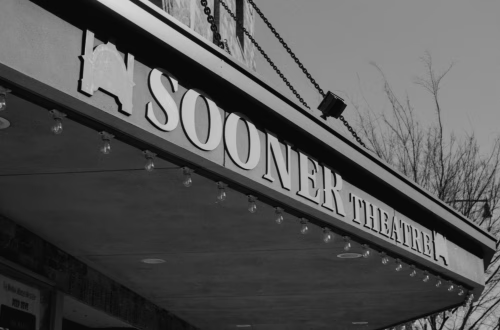
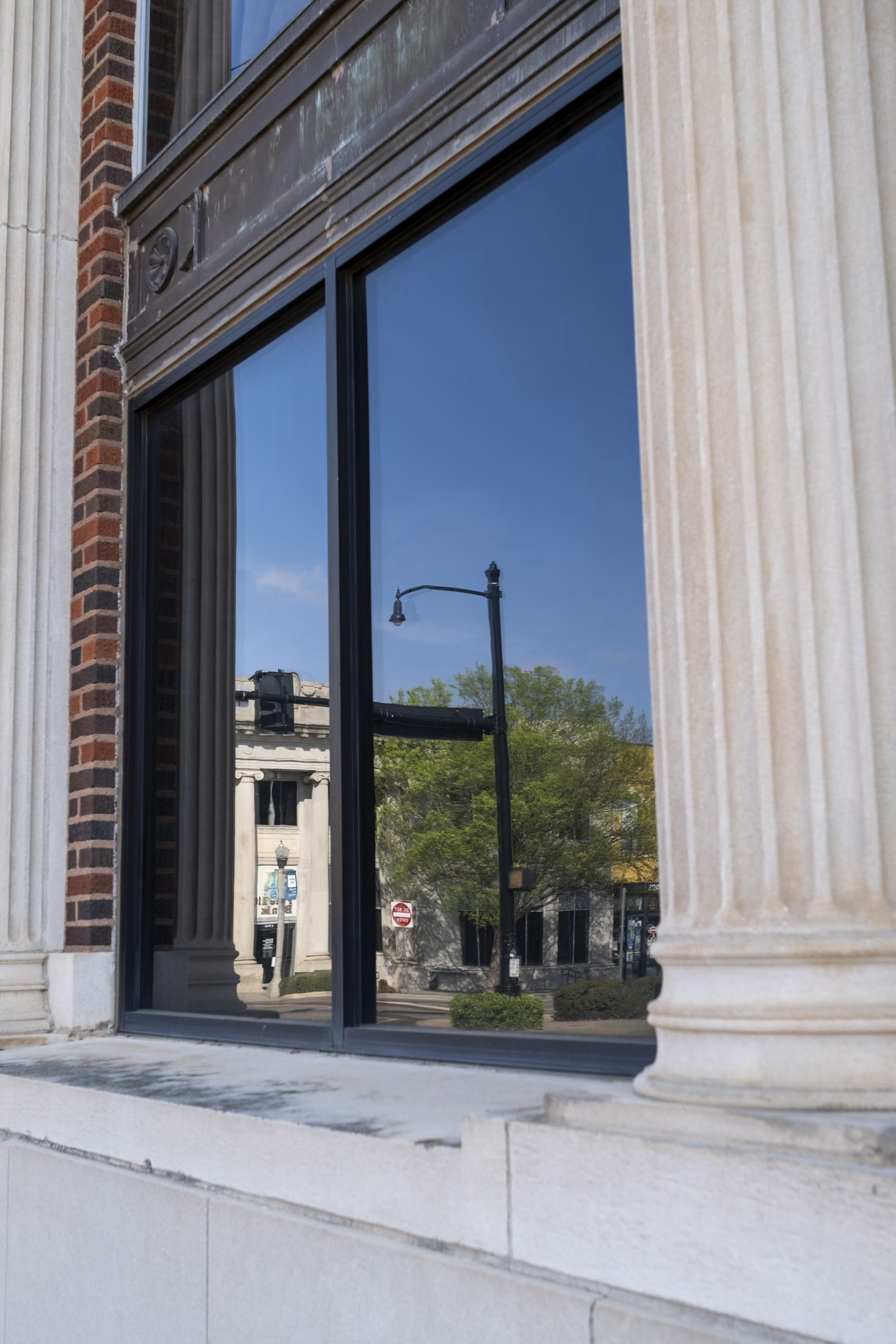
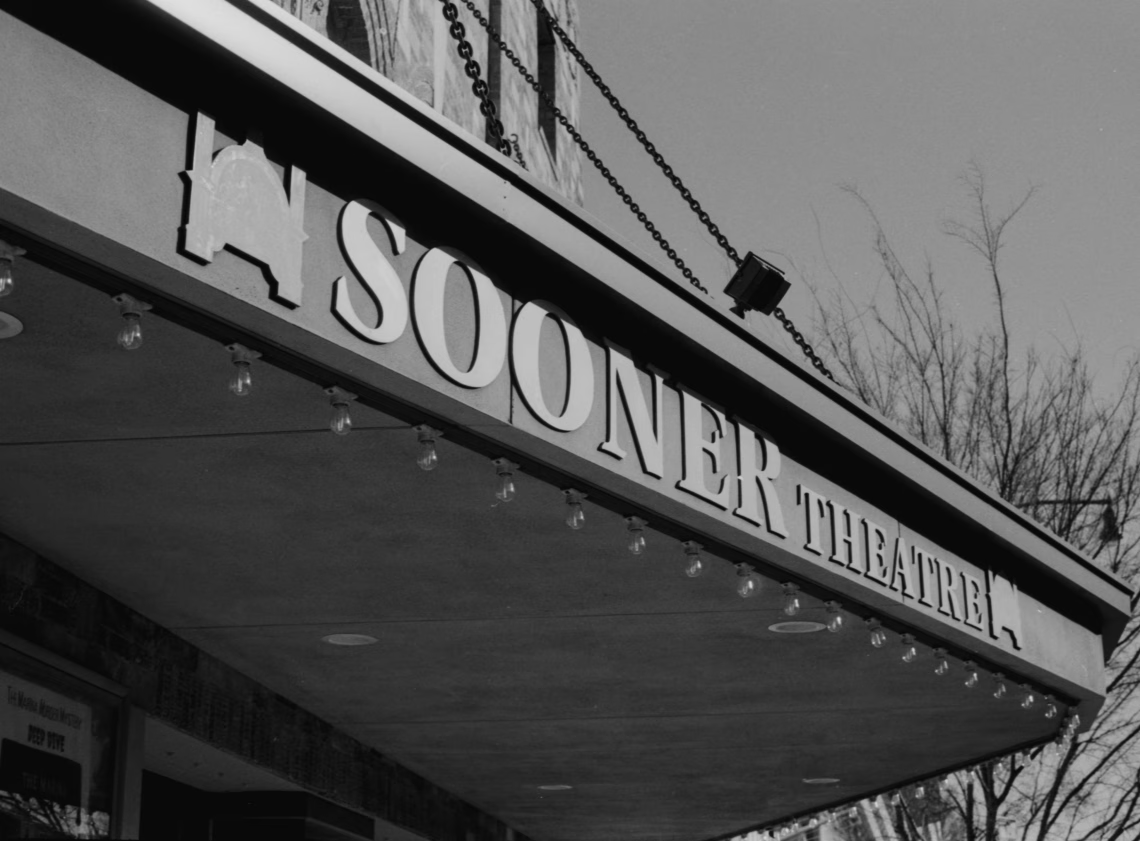
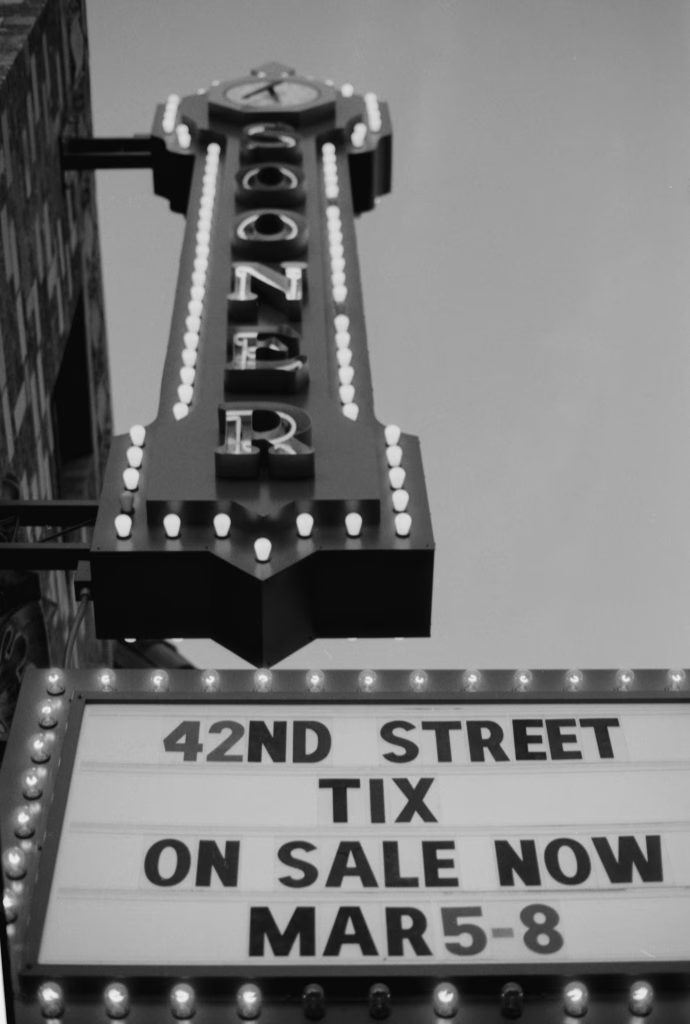
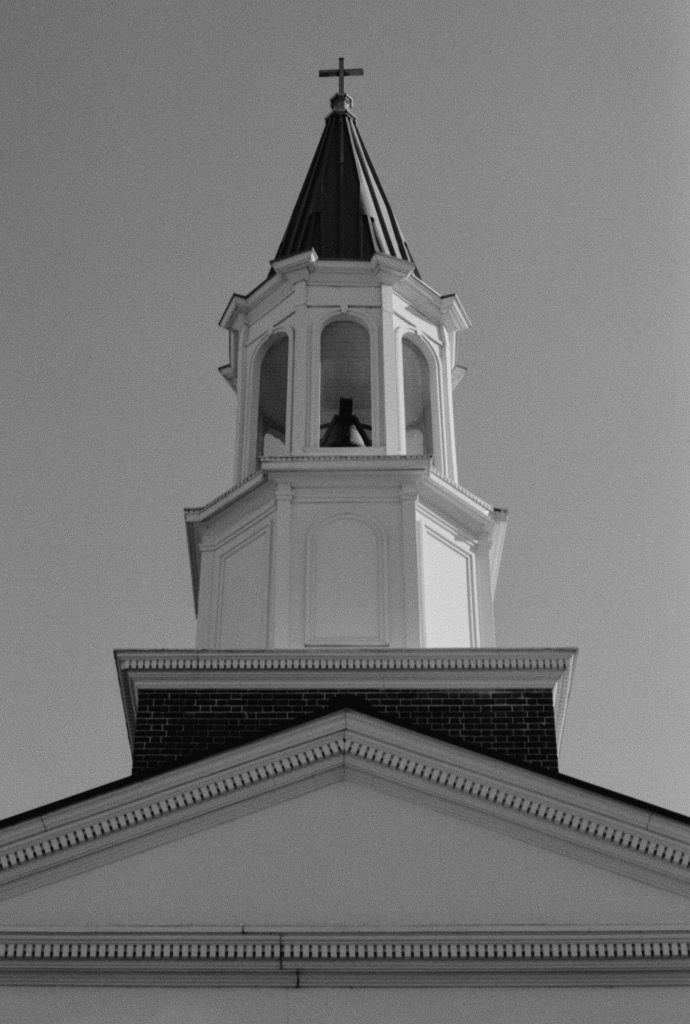
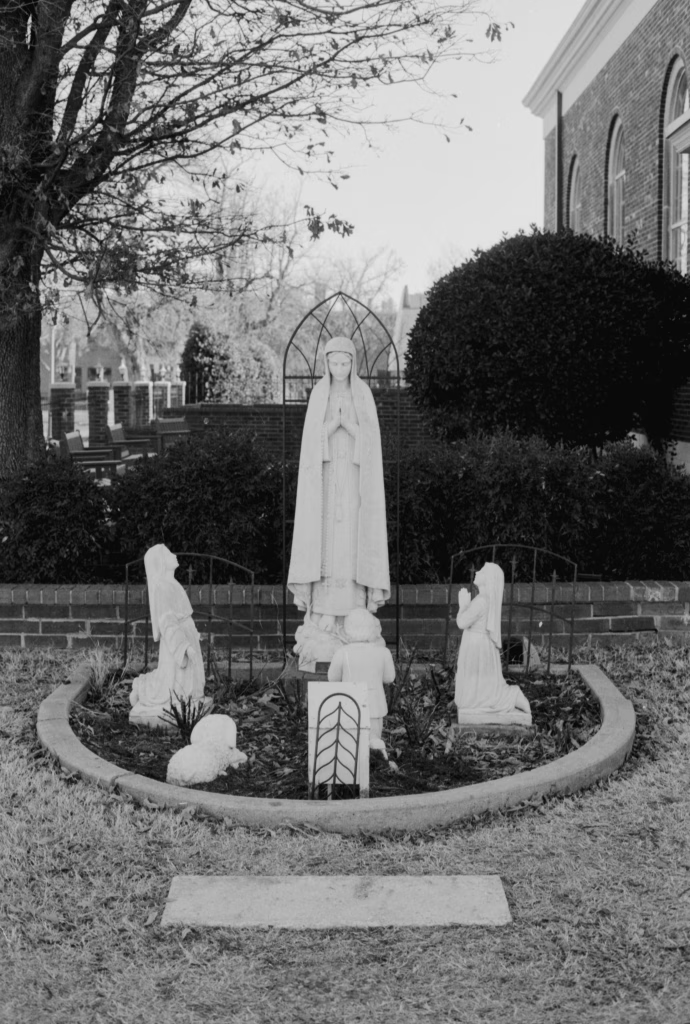
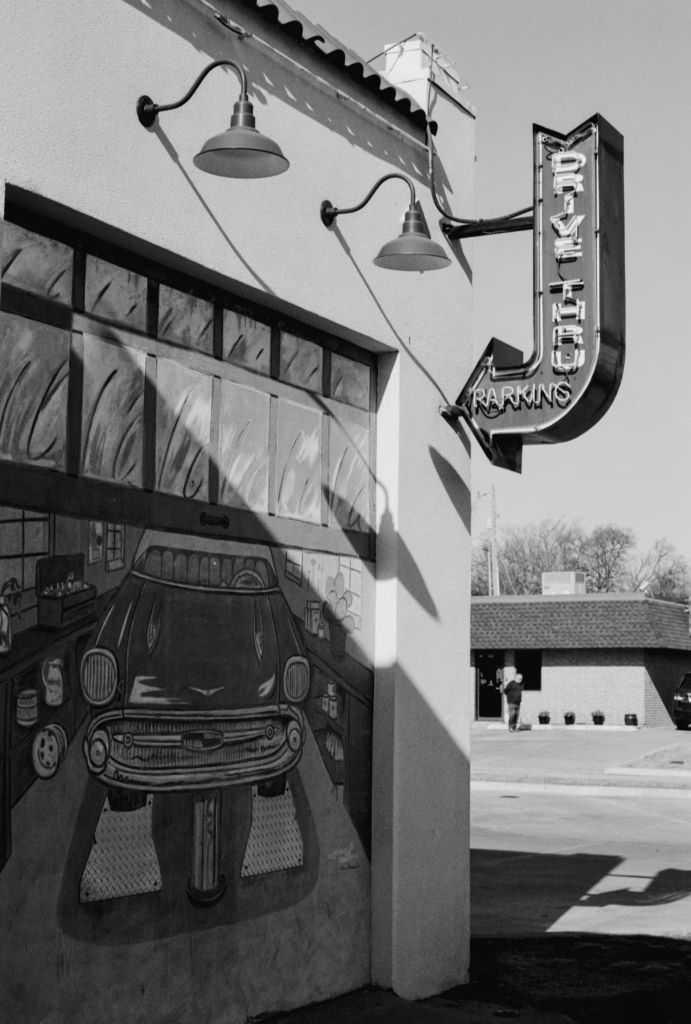
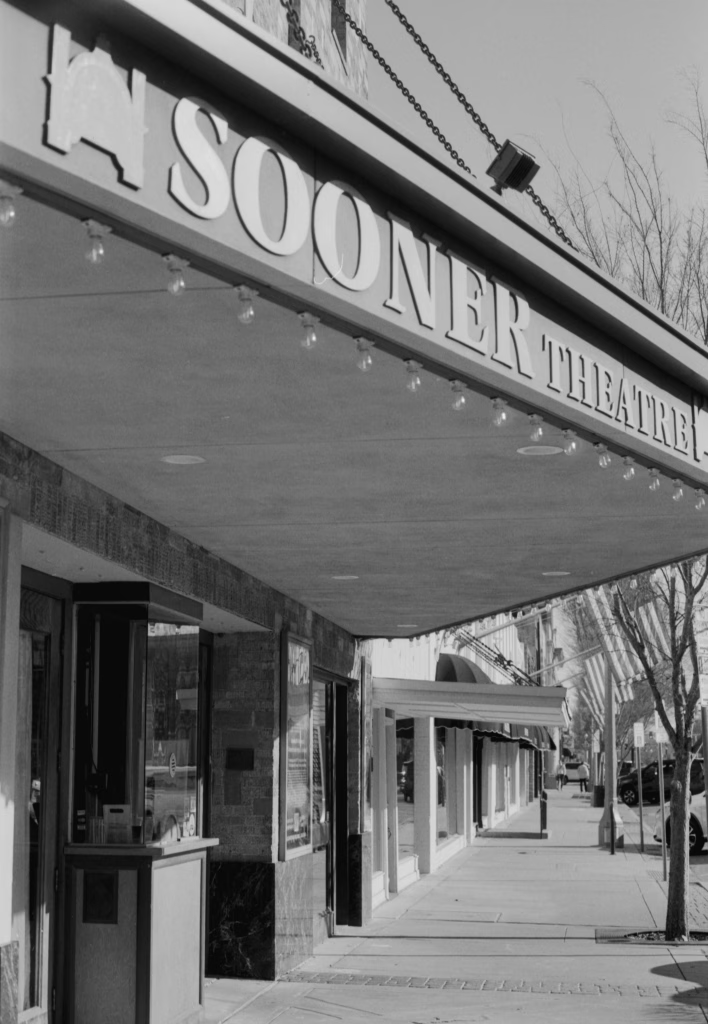
Tonight I don’t have many words left in me. The walk was long, the coffee strong, and the company excellent. Instead of more storytelling, I’ll leave you with some of the photographs I took during today’s jaunt. They may not capture every scent or sound, but I hope they give you a glimpse of the Norman I walked through this Monday.


-
Why I Chose the Fujifilm X-T4 for My Digital Photography
Over the past few weeks, I’ve been writing about the rising cost of film photography, and unfortunately, the trend hasn’t slowed down. With global instability, tariffs, silver prices, and persistent inflation, film prices continue to climb. Film photography is drifting into the territory of a luxury hobby. That’s a difficult reality to accept, especially for those of us who have relied on it as a primary creative outlet.
I don’t want photography, especially something as timeless and expressive as film, to become inaccessible. But practicality has a way of forcing decisions. For me, that meant looking for an alternative.
Some of you may remember that I previously owned a Sony A7cII. It was, in many ways, an incredible camera, compact, full-frame, and packed with modern technology. I genuinely loved using it. But after our move, I found myself back in the market, searching for something more affordable yet still capable. This time, however, I wanted something different, something more tactile, more physical in its design and operation.
My vision plays a major role in how I interact with cameras. I have about five degrees of vision in one eye and none in the other. On top of that, the vision I do have is around 20/200. That places me well within the definition of legal blindness in the United States, both in terms of acuity and visual field. In simple terms, I’m working with very limited visual information.
Because of that, the way a camera feels in my hands matters just as much as what it can do technically. Buttons, dials, and physical controls aren’t just aesthetic preferences, they’re essential. I need to be able to operate a camera through memory and touch as much as sight.
When I last searched for a camera, I came across Fujifilm’s X-T series but ultimately chose Sony for its compatibility with my collection of Minolta Maxxum lenses. This time, I revisited that decision.
I started researching the Fujifilm X-T lineup, the X-T3, X-T4 and X-T5. The X-T5, while impressive with its 40-megapixel sensor, is still relatively new and priced accordingly. The X-T3, on the other hand, is a solid performer but beginning to show its age, having been released back in 2018.
That left the X-T4.
The X-T4 strikes a balance that’s hard to ignore. It features a 26-megapixel sensor, excellent build quality, and meaningful upgrades like improved autofocus with eye tracking and a faster burst rate. More importantly, it retains the tactile design philosophy that Fujifilm is known for; dedicated dials, physical controls, and a shooting experience that feels deliberate and intuitive.
After some patient searching, I found a used X-T4 with a low shutter count for roughly half the price I had paid for my Sony. It felt like one of those rare moments where everything lines up perfectly; a professional level camera at a consumer level price.
I paired it with a few inexpensive adapters for M42, Pentax K, and Minolta mounts so I could continue using my vintage lenses. Even with its APS-C sensor, the image quality is outstanding, more than enough for my needs and far beyond what the price might suggest.
One aspect I didn’t expect to dive into was Fujifilm’s film simulation recipes. What started as curiosity quickly turned into a bit of a rabbit hole. I’ve since set up several custom recipes tailored to my preferences, and they’ve become a core part of how I shoot.
Regardless of whether I’m using film or digital, I always shoot in black and white. With my level of vision, contrast isn’t just an artistic choice, it’s a necessity. Color, while beautiful, is noise to me. It distracts more than it helps.
Contrast, on the other hand, defines the world.
I use a cane to navigate my surroundings, but when it comes to photography, contrast is what guides me. Within that narrow five-degree window of vision, everything is blurred. Without strong separation between light and dark, the scene collapses into an indistinct mass. But when contrast is present, when shadows and highlights carve out shapes, I can see. Not clearly, but meaningfully.
The X-T4 fits into that process beautifully. It’s a tool, first and foremost. I don’t pretend to use it to its full technical potential, but I use it often, and I use it with intention.
Like many visually impaired people, I rely heavily on memory. I memorize environments, layouts, and patterns. Photography is no different. I memorize my camera settings and the physical positions of the dials. I know how far to turn a knob, which direction adjusts what, and how each change will affect the image.
If I set my ISO to 160 and my shutter speed to 1/125 of a second, I can rely on muscle memory to adjust the aperture accordingly. That part becomes second nature.
What matters is the result, the ability to capture something from the world as I experience it.
The Fujifilm X-T4 has proven to be an incredible companion in that effort. It’s not just about specifications or features; it’s about how the camera fits into my way of seeing, or, more accurately, my way of interpreting what little I can see.
I’ll be putting together a long-term review in a few months after I’ve spent more time with it. For now, I can say that it has allowed me to keep creating at a time when film photography feels increasingly out of reach.
And that, more than anything, makes it worth it.
Below, I’ll be sharing some sample images from my time with the camera so far.


-
Is Film Dead or Thriving? Examining Current Trends
Like many of you, I vividly remember a time when film was the only game in town for photography, whether you were an amateur snapping family moments or a pro chasing assignments. Shooting on film meant deliberate choices: metering carefully, composing with intention, and accepting that every frame cost money and couldn’t be instantly reviewed. Then, in the mid-2000’s, digital cameras became viable options for amateurs and professionals alike. By the late 2000’s and early 2010’s, the shift was nearly complete. Digital offered instant feedback, virtually unlimited “film”, and far lower per-shot cost.
During the COVID era (roughly 2020–2022), and something unexpected happened: film experienced a genuine resurgence. Stuck at home, many people sought tactile, meaningful hobbies. Loading a roll, advancing manually, and waiting for development felt like a rebellion against endless screen time. I dusted off my old film cameras, started shooting again, and even set up a home darkroom. The same wave lifted vinyl records back into mainstream popularity, both analog formats offered an “essence” and grounded, earthly feel that digital files (just streams of 1’s and 0’s) simply can’t replicate for everyone.
Film’s magic lies in its imperfections and process. That grain, those subtle tonal shifts, the way light interacts with emulsion, it’s organic in a way pixels aren’t. Everyone who calls themselves a photographer should try film at least once: learn to meter by hand, understand reciprocity failure, and master the full workflow, including developing your own negatives.
Personally, I love pushing Arista EDU 400 to 800 or even 1600 in low-light situations, then developing in 510-Pyro to retain fine grain while squeezing out every stop of sensitivity. These decisions happen before you even press the shutter. It’s a thoughtful, premeditated craft that forces discipline.
I’m not a film snob. Digital is incredibly convenient: walk into a dim building, crank the ISO, and keep shooting without a second thought. No waiting for processing, no risk of light leaks or bad chemistry. For pros needing speed, volume, or client turnarounds, digital remains king—and rising film costs have pushed many back that way.
Recent trends show the resurgence has cooled somewhat. Sales boomed during the pandemic but appear to be flattening or stabilizing into a dedicated niche rather than explosive growth. The market remains healthy as a niche. Global photographic film sales exceeded 20 million rolls in 2023 (up 15% from 2022), with production ramping up (Kodak and Fujifilm increased capacity by around 20% in recent years to meet demand). Black-and-white film saw solid gains (10% shipment increase in some reports), and instant film surged in places like Asia-Pacific.
Prices tell a different story, especially for color film. Kodak and other manufacturers have raised prices multiple times since 2023, with increases of 10–25% in some cases, and more hikes announced or implemented in 2025–2026 (some reports cite 20–50% jumps for certain stocks due to raw material costs like silver, which spiked dramatically in 2025).
Average U.S. film prices rose about 9% from early to mid-2025 after a brief dip in 2024. Premium emulsions like Portra or slide films have climbed noticeably, while some black-and-white options (like Tri-X) have stayed more stable or even seen temporary reductions.
As an American, I’d love to shoot Kodak exclusively. It’s iconic, reliable, and made here. Kodak has made positive moves: resuming direct distribution of consumer stocks like Gold 200 and Ultramax 400 (after more than a decade through third parties), introducing new/rebranded options like Kodacolor 100/200, and taking greater control to stabilize supply and pricing. They’ve also expanded professional lines and boosted motion-picture film sales (higher than since 2014 in some years). I hope this extends fully to TMax black-and-white films, potentially lowering prices through better distribution and reduced middlemen.
So, is film dead? Absolutely not. It’s evolved from the default medium to a cherished, intentional alternative like vinyl in music. The “end of an era” might refer to film’s dominance, but we’re in a new one: a vibrant niche supported by enthusiasts, artists, educators, and even some pros who mix formats. Film won’t reclaim the mass market, but it doesn’t need to. As long as manufacturers like Kodak, Ilford, and Fujifilm keep producing, labs keep developing, and people keep loading rolls, analog photography endures.
What about you? Do you shoot film regularly, or has the price creep pushed you more toward digital? Have you noticed changes in availability or costs lately? I’d love to hear your thoughts in the comments, whether you’re a die-hard analog shooter or someone who’s curious to try it.
-
Capturing Moments with Minolta’s 50mm f/1.4 Lens
Recently, I discovered a Minolta 7000i with a 50mm f/1.4 lens for the price of a cup of coffee and a bagel. The lens is worth far more than the camera, making this an incredible find for any photography enthusiast. I had one of the cameras already, but I gave it to a friend who needed it more and found myself in search of a replacement auto-focus Minolta Maxxum camera for my various lenses. This particular camera came with an amazing lens, the infamous 50mm f/1.4, known for its versatility and rich image quality. The camera arrived a few weeks later. After some cleaning and a new battery, it worked perfectly, like new, showing no signs of its vintage age.
Eager to test it out, I grabbed a roll of Kentmere 100 and headed out to take some test shots that you can see below, relishing the feeling of anticipation that comes with trying out new gear. Please reference my previous post about being a blind photographer, which explores the unique challenges and joys I experience in this creative pursuit. The next day, I finished off the roll and developed it in 510Pyro, a process that I have honed over time, pushing the boundaries of what is possible. A blind guy developing film? Yes, I do that, too! It’s a testament to the power of dedication and the love for my craft, as I navigate the world of photography in my own unique way.
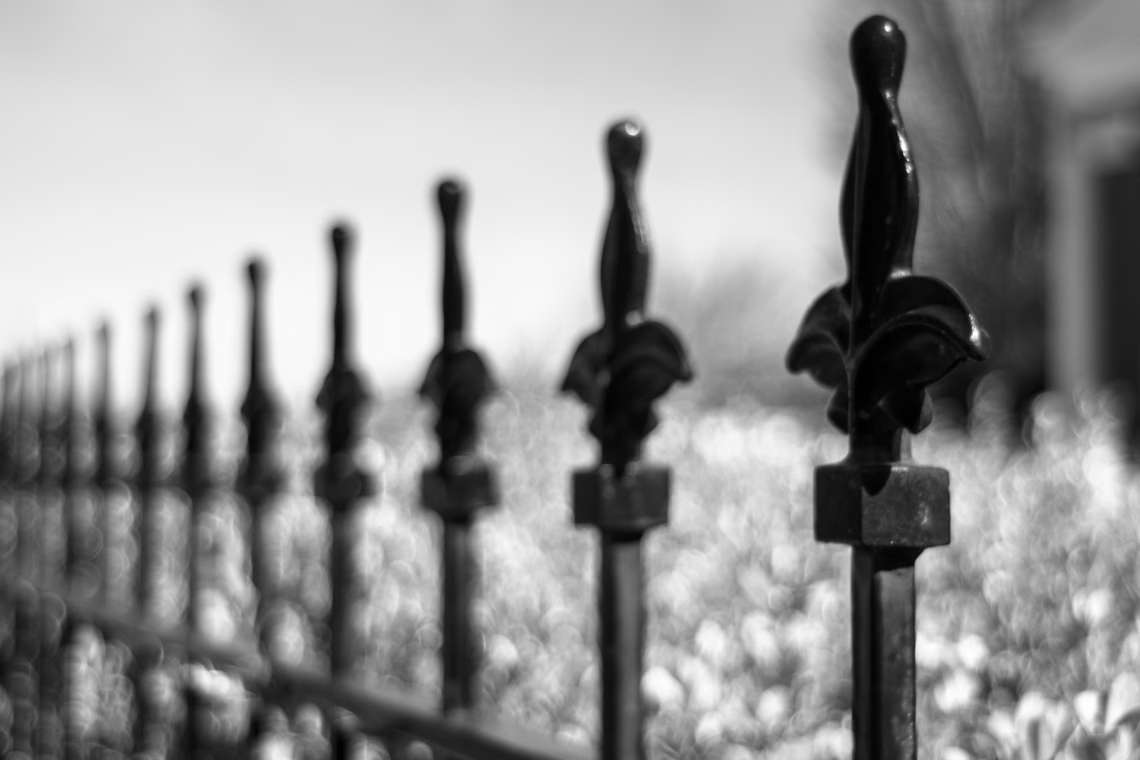
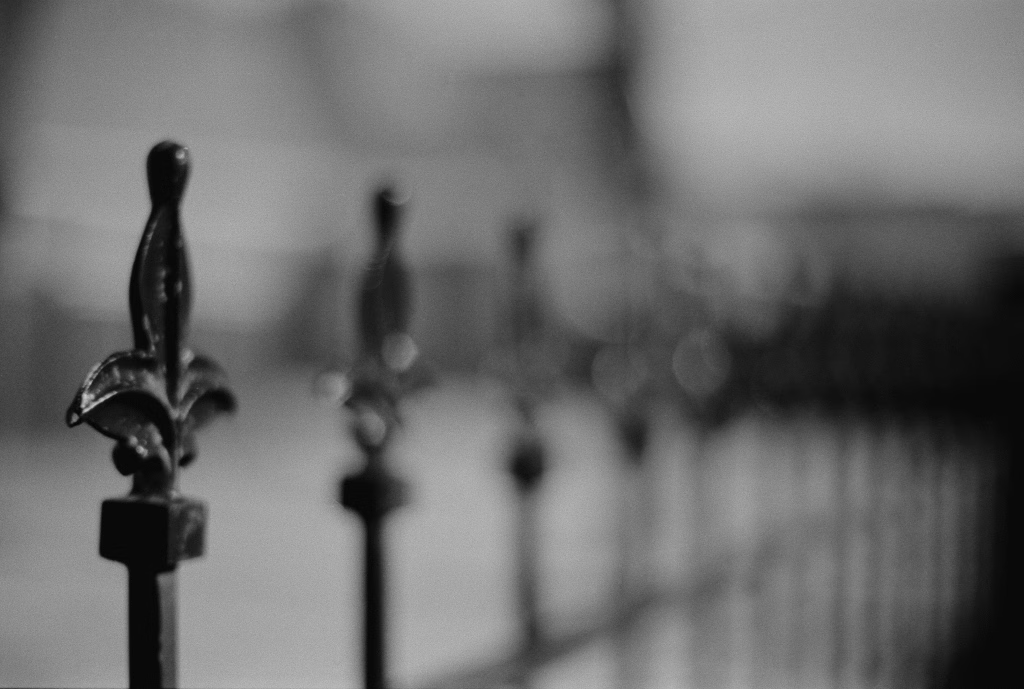
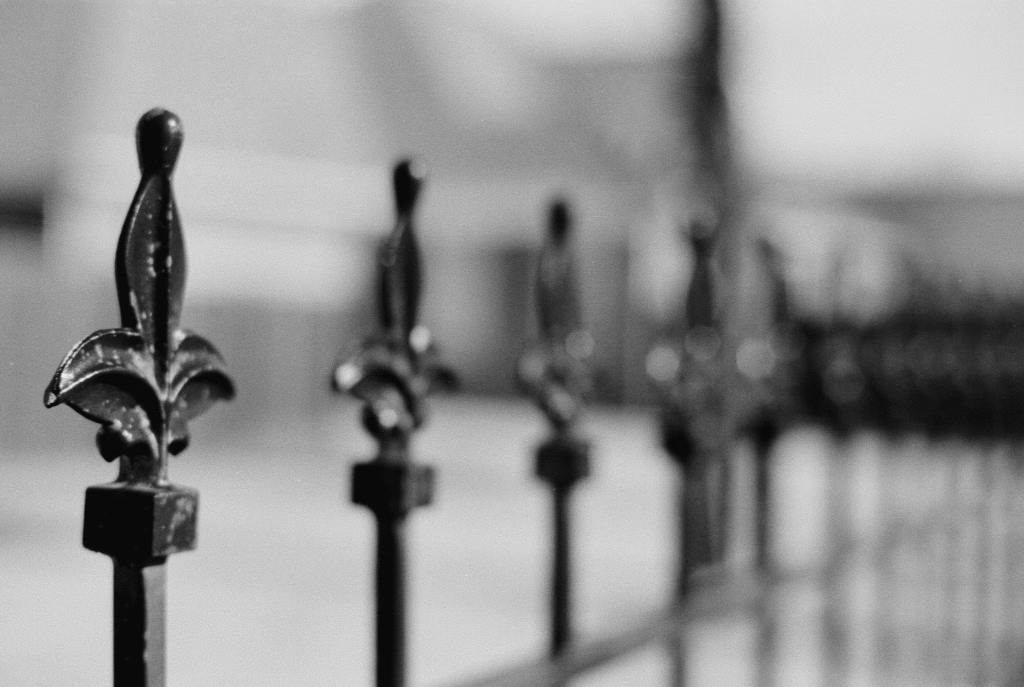
The next morning, I started scanning the film and was genuinely happy with the results, feeling a rush of satisfaction as each image came to life on my screen. The Minolta Maxxum 50mm f/1.4 lens provided amazing results both at infinity and close up, allowing for a range of creative expression that I didn’t think was possible until I experienced it firsthand. The bokeh was buttery smooth, just as expected, adding a professional touch to my photographs that elevated them beyond the ordinary. Due to it being such a fast lens, it focuses quickly, even in darker environments, enabling me to capture fleeting moments without hesitation.
What say you?