-
Capturing Moments with Minolta’s 50mm f/1.4 Lens
Recently, I discovered a Minolta 7000i with a 50mm f/1.4 lens for the price of a cup of coffee and a bagel. The lens is worth far more than the camera, making this an incredible find for any photography enthusiast. I had one of the cameras already, but I gave it to a friend who needed it more and found myself in search of a replacement auto-focus Minolta Maxxum camera for my various lenses. This particular camera came with an amazing lens, the infamous 50mm f/1.4, known for its versatility and rich image quality. The camera arrived a few weeks later. After some cleaning and a new battery, it worked perfectly, like new, showing no signs of its vintage age.
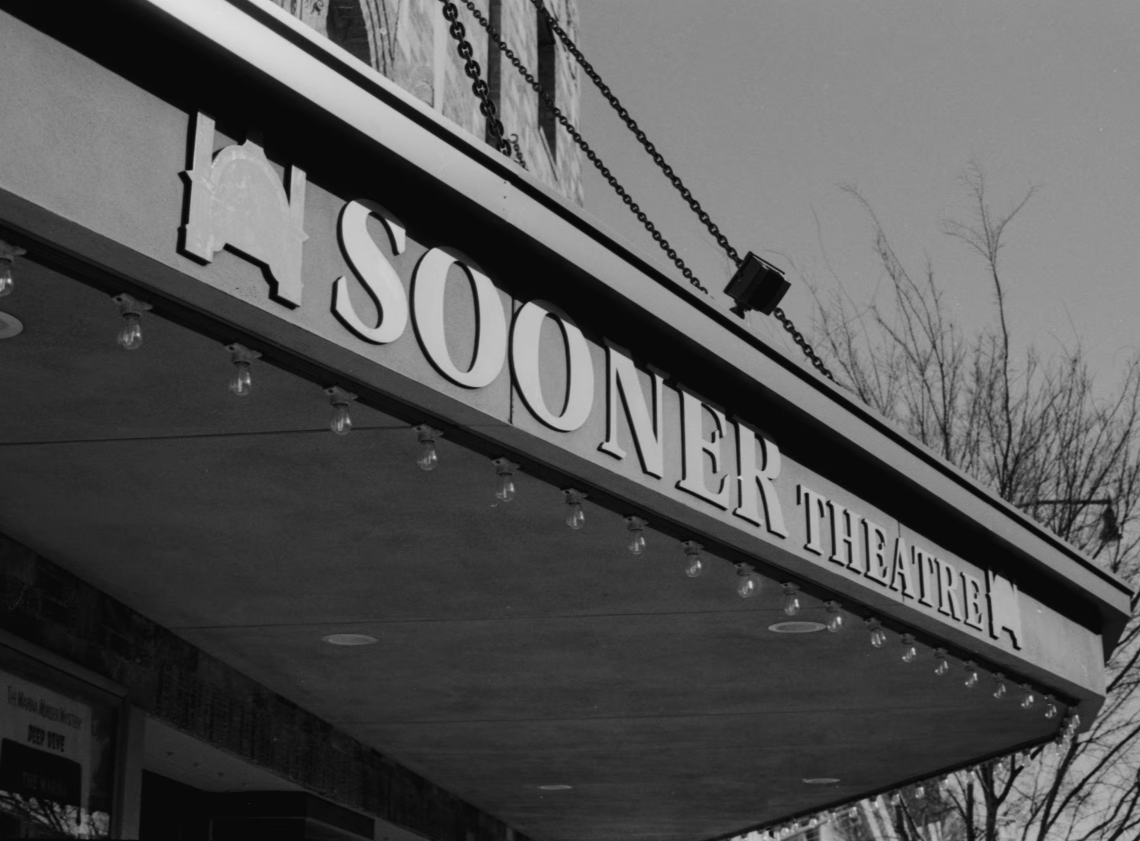
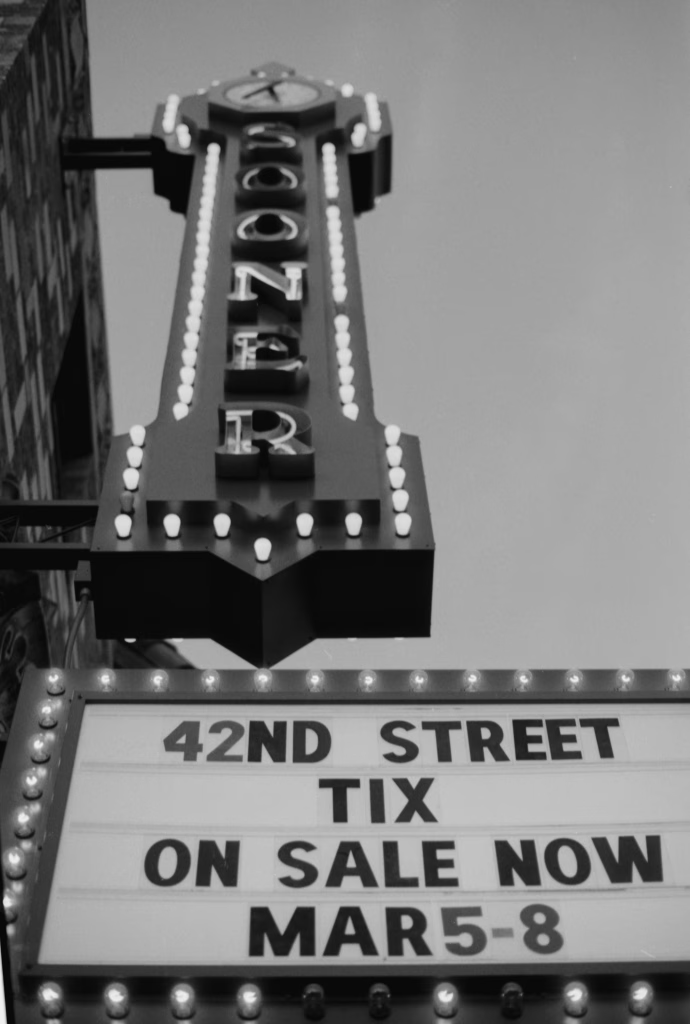
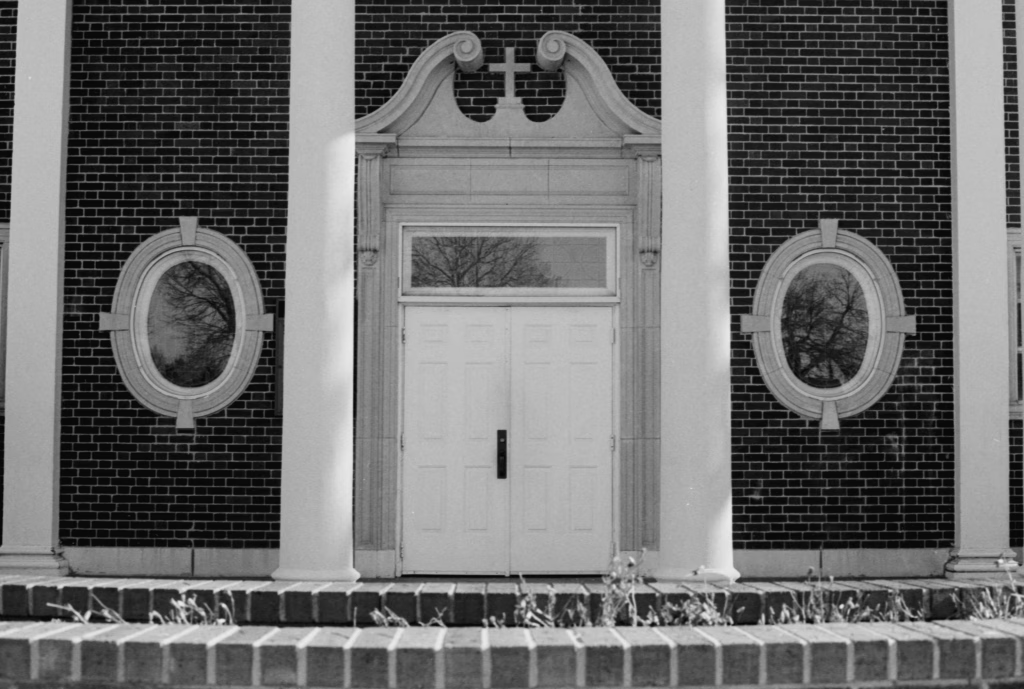
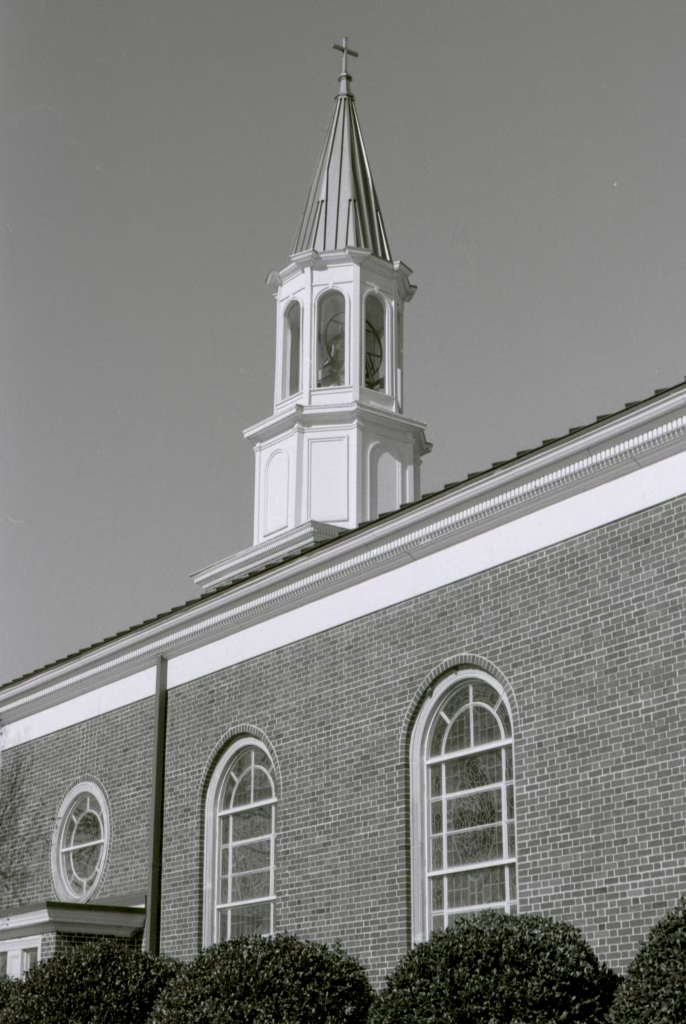
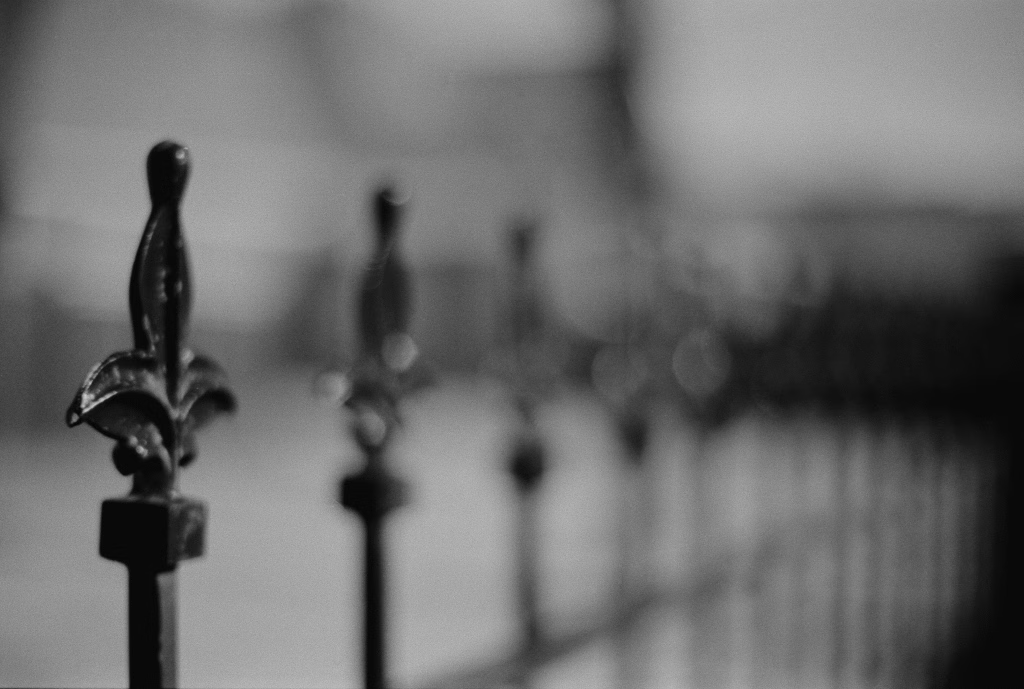
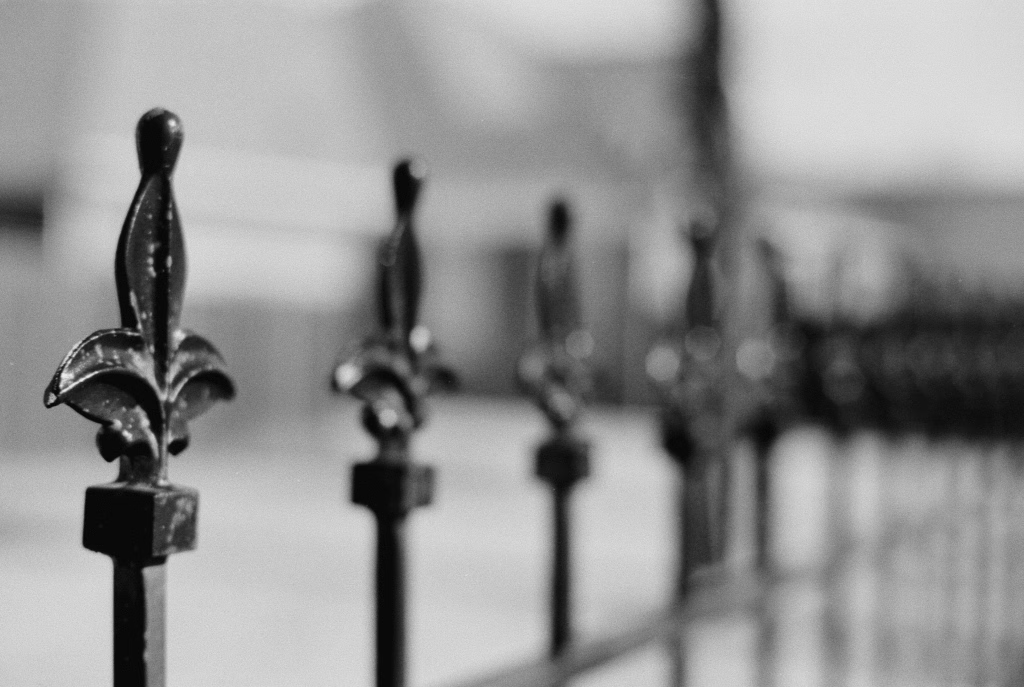
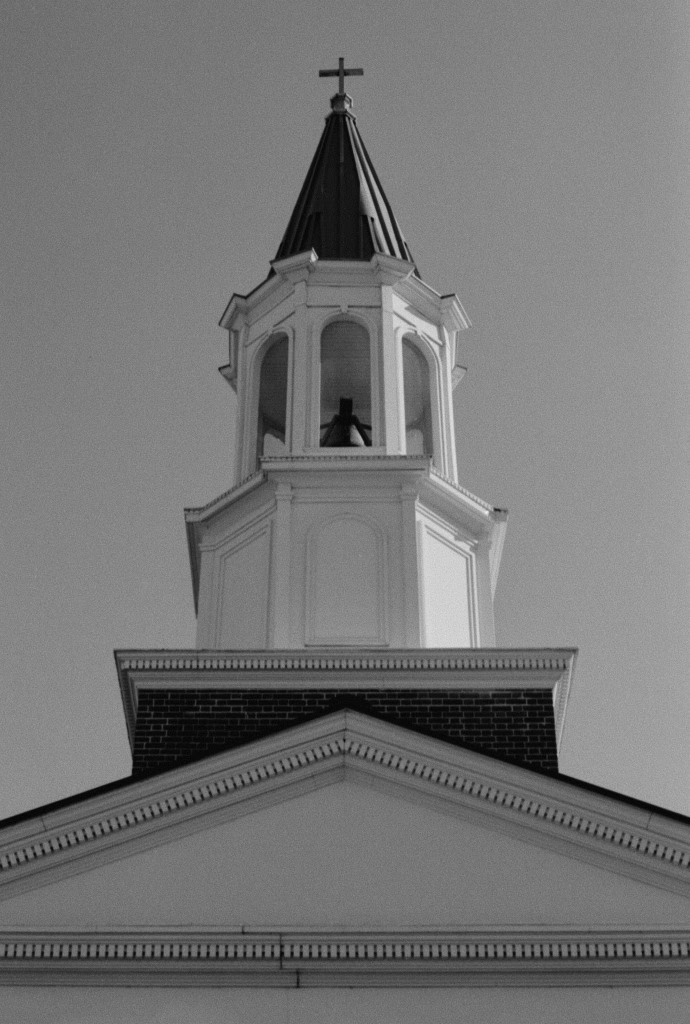
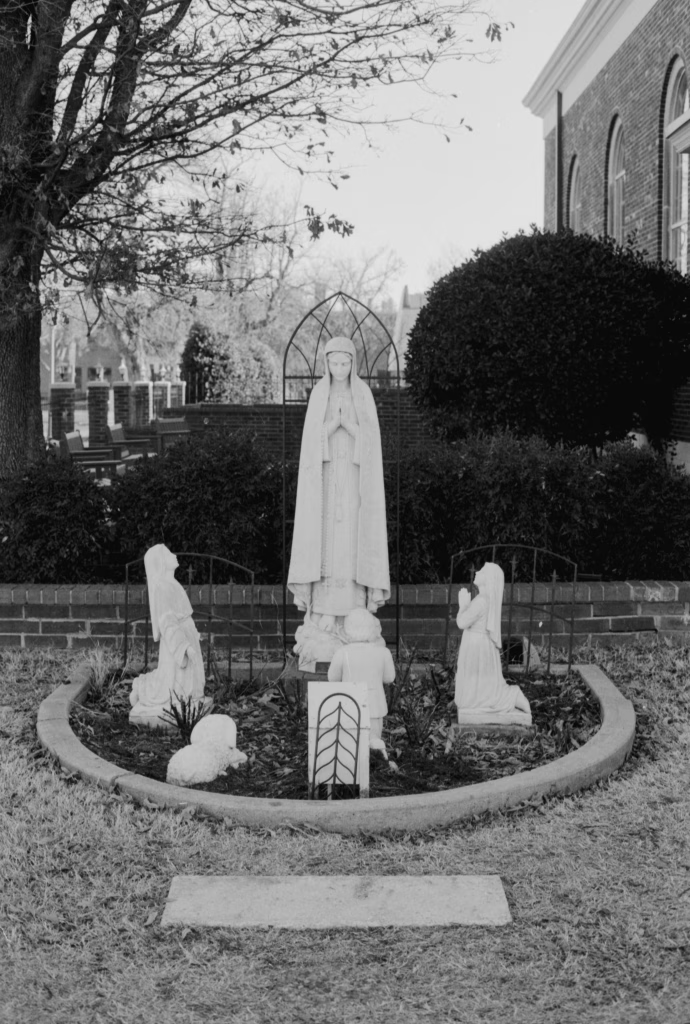
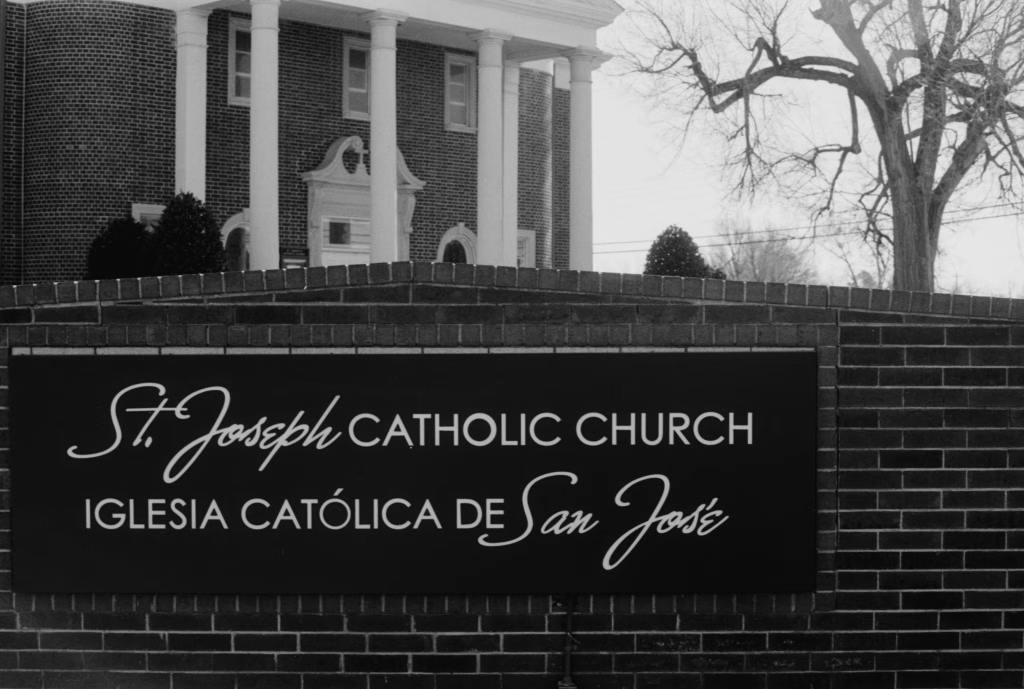
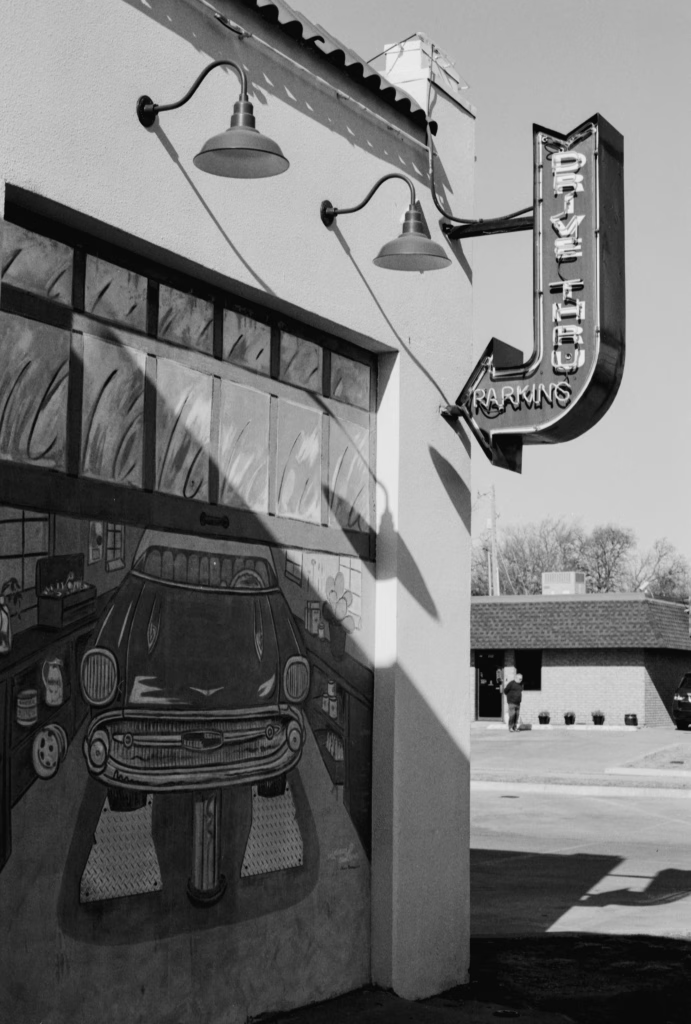
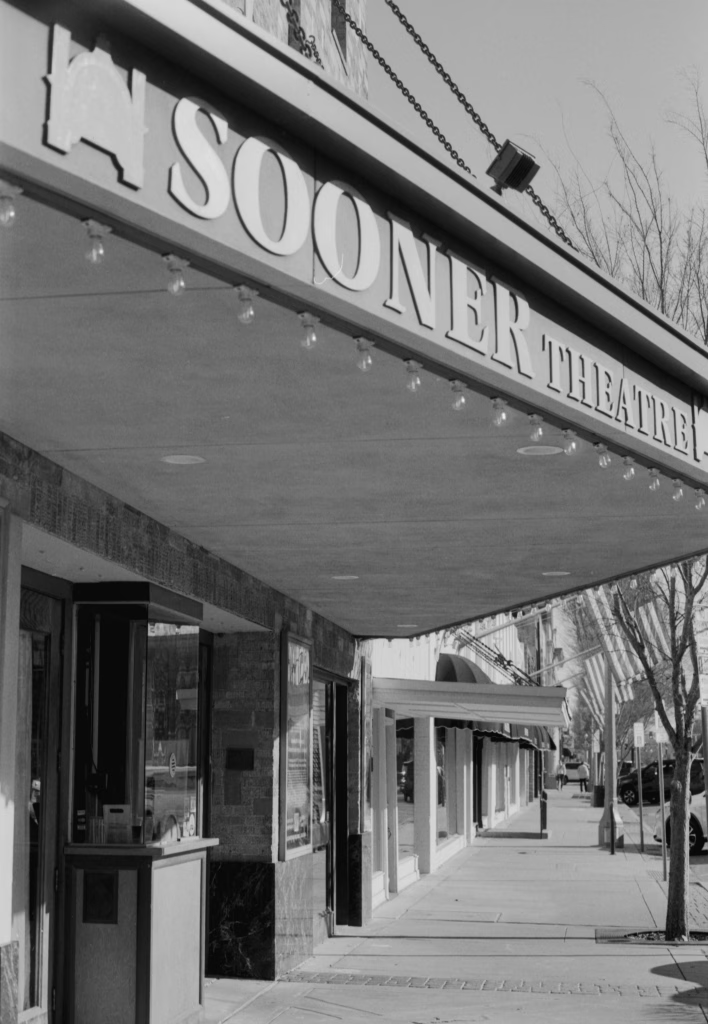
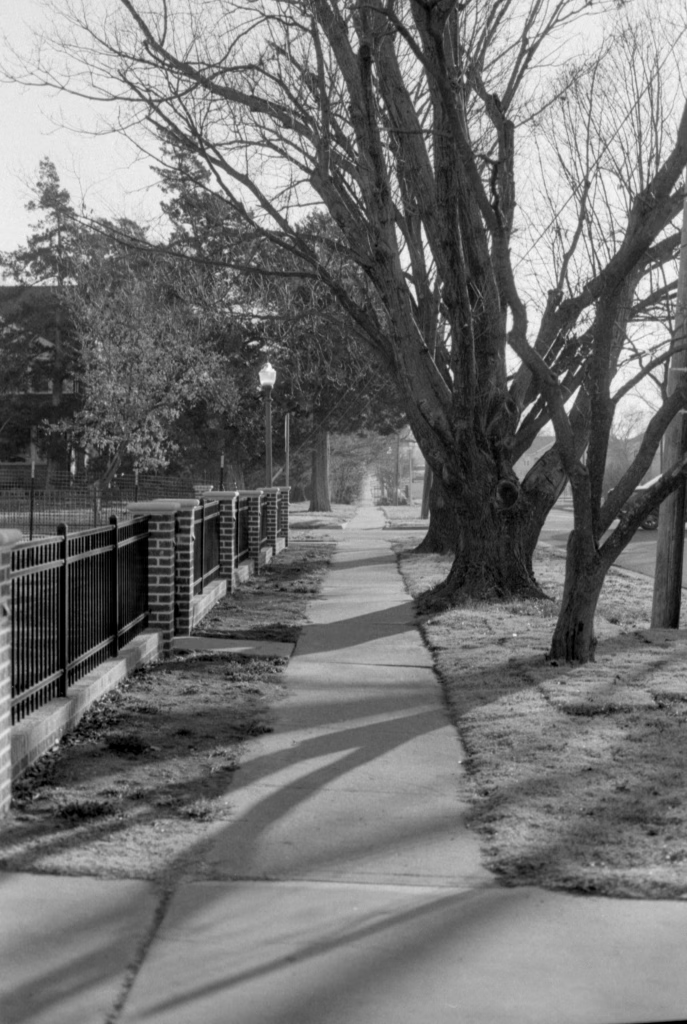
Eager to test it out, I grabbed a roll of Kentmere 100 and headed out to take some test shots that you can see below, relishing the feeling of anticipation that comes with trying out new gear. Please reference my previous post about being a blind photographer, which explores the unique challenges and joys I experience in this creative pursuit. The next day, I finished off the roll and developed it in 510Pyro, a process that I have honed over time, pushing the boundaries of what is possible. A blind guy developing film? Yes, I do that, too! It’s a testament to the power of dedication and the love for my craft, as I navigate the world of photography in my own unique way.
The next morning, I started scanning the film and was genuinely happy with the results, feeling a rush of satisfaction as each image came to life on my screen. The Minolta Maxxum 50mm f/1.4 lens provided amazing results both at infinity and close up, allowing for a range of creative expression that I didn’t think was possible until I experienced it firsthand. The bokeh was buttery smooth, just as expected, adding a professional touch to my photographs that elevated them beyond the ordinary. Due to it being such a fast lens, it focuses quickly, even in darker environments, enabling me to capture fleeting moments without hesitation.
What say you?


-
A Shot in the Dark: Still Chasing Light as a Blind Photographer
Hi, I’m Jefferson Davis, I’m a photographer. It still feels a little absurd saying that out loud sometimes, like confessing a quirky habit at an awkward support group meeting. “Hi, my name is Jefferson, and I’m a blind guy who insists on taking pictures.” But here I am, more than five decades into this wild ride on planet Earth, still hauling cameras around and clicking shutters, even as my vision fades.
It all started way back when I was just one day old. I contracted spinal meningitis in the hospital, a brutal infection that nearly ended my story before it really began. I survived, but the damage was done. It triggered Septo-Optic Dysplasia, a condition that destroyed my left eye in infancy and set off a slow, relentless optic atrophy in my right. Over the years, that right eye has dwindled to about five degrees of usable vision, a tiny peephole into the world, and nothing at all in the left. It’s progressive, irreversible, and one day, likely soon, that small window will close completely. But here’s the honest truth: I’m grateful for the sliver I still have. It lets me glimpse shapes, contrasts, and colors in a way that keeps me tethered to the visual world I’ve loved for so long.
Molly Burke, the advocate and podcaster who’s built a platform around her own blindness, put it perfectly in a recent discussion (paraphrasing from memory): the physical challenges of not seeing are tough, but the social side of blindness, the stares, the assumptions, the isolation, is often the real gut punch. I couldn’t agree more. The cane, the fumbling, the daily adaptations? Those are hurdles I can navigate. It’s the way the world sometimes reacts that stings the deepest.
I still vividly remember my first few trips to the local coffee shop after my vision loss became obvious and I had to use the white cane. I’d walk in with my white cane tapping ahead, and the entire room would fall silent. Conversations halted mid-sentence. I could feel the eyes locking onto me, the unspoken questions hanging in the air: “What’s wrong with him?” “Is he really blind?” “Why is he even here?” The awkwardness was suffocating. It took weeks before the regulars adjusted. Eventually, the stares turned to nods, then smiles, then jokes. We started chatting about the weather, the latest news, or how strong the brew was that day. That shift felt like a small victory. But getting there required me to push through the discomfort, to show up anyway.
These days, the white cane is practically an extension of my arm. I don’t flinch when people stare or whisper. Until I receive a guide dog (and yes, I’ve had plenty of well-meaning folks ask when that’s happening), the cane is non-negotiable for safe, independent mobility. In the blind community, there’s a quiet understanding that guide dogs often carry less stigma. They’re seen as “heroic” or “inspirational,” while the cane can still evoke pity or confusion. But I refuse to let outdated attitudes dictate my choices. I go where I want, when I want, cane in hand, no apologies.
Now, to the part that really baffles people: I’m blind, and I still photograph. When I sling an old film camera over my shoulder, I can practically hear the mental gears grinding in onlookers heads. “Wait… he’s blind. Why is he taking pictures? How does that even work?” I’ve been interrupted mid-shot more times than I can count, strangers stepping right up, genuinely puzzled or sometimes skeptical, asking exactly that.
The answer is straightforward, at least to me. I’ve been making photographs for over 40 years. Some of it was casual fun, some professional gigs, but all of it rooted in a deep love for capturing moments. Losing most of my sight didn’t erase that passion; it just changed how I pursue it. Think about it this way: if you’d spent decades playing golf, perfecting your swing, chasing birdies on the green, dand then lost your vision, would you quit the game entirely? Or would you adapt, find new ways to feel the club, hear the ball drop, sense the course? Of course you’d try to keep playing. Photography is my golf. It’s the thing that lights me up, keeps me engaged with the world, and gives me purpose.
It’s not easy anymore, and I won’t sugarcoat that. I can’t see what’s in the frame most of the time. Shutter speeds and aperture markings? Forget it, unless I pull out my 22x magnifier, squint hard, and hold it up against the lens, those tiny numbers are a blur. Focusing is guesswork, composition relies on memory and, muscle memory, and sometimes just instinct. I frame shots based on what I think is there, drawing on decades of sighted experience. I listen to the sounds around me, feel the light on my skin, remember the layout of a familiar spot. Every click is a leap of faith.
And yet, when the film is scanned onto the computer, there’s magic in it. My wife helps me review them, and together we decide what works. Some images surprise even me; others capture exactly the feeling I was chasing. One day, when that last bit of vision is gone, she’ll still have those negatives, those files, those frozen slices of time. That’s enough for me.
Of course, not everyone gets it. The skeptics are the hardest to deal with, the ones who watch me pour creamer into my coffee at the same shop I’ve visited hundreds of times and decide they’ve “caught” me faking. They don’t realize I’ve memorized the counter layout, the position of the sugar packets, the pour spout on the creamer jug. It’s adaptation, not deception. I’ve had ophthalmologists, neurologists, specialists galore confirm the extent of my vision loss. But some people seem determined to prove otherwise.
I’m always open to genuine questions, though. If someone approaches with real curiosity, ”What’s the cane for?” “How do you know when to click?”, I’m happy to chat. Kids are the best at this; they haven’t learned to filter or judge yet. They’ll walk right up, point at the cane, and ask point-blank. Those conversations are gold. They remind me that education happens one honest exchange at a time.
The “why are you even bothering?” crowd, though? That gets old fast.
I’m not alone in this pursuit. There are perhaps a couple dozen known blind or visually impaired photographers worldwide—creative souls like Pete Eckert, who shoots conceptually from memory and imagination; Evgen Bavčar, whose work explores photography as a conceptual language; Alice Wingwall; Henry Butler; and others who’ve turned limitation into innovation. Some rely entirely on sound, touch, and visualization; others, like me, cling to that remaining bit of sight. We’re a small but stubborn group, proving that the urge to create images doesn’t vanish when eyesight does.
For me, it’s about holding onto joy. Photography keeps me connected to people, to places, to the fleeting beauty of everyday life. Even if I only glimpse a fraction of the 24x36mm frame on film, that fraction matters. It keeps me alive in ways nothing else quite does.
So yeah, I’m a blind photographer. It’s a contradiction that makes perfect sense to me. And as long as I can hold a camera steady, I’ll keep shooting. The world can stare all it wants, I’m too busy chasing the next shot in the dark.
-
Snow Ice Walkabout Adventure: A Monday Encounter
Due to the snow and ice weekend before last and the cold temperatures that didn’t get above freezing for days, we haven’t been venturing out much. While I did work this past Friday and Saturday, I wasn’t able to go out for a walk last week. I need my walkabouts with coffee a couple times a week.
As much as I love my wonderful wife, Deana, and our adorable 3 furry kids, I like to venture out as much as I can. We moved to Norman, OK a little over a month ago, but due to the time of year, I haven’t been able to venture all over the city like I normally would.
Today, the weather was scheduled to be fair and sunny, a balmy 50 degrees Fahrenheit. One of the coffee shops I wanted to try is BeanStalk. They have a huge selection and reached out to me on social media when asking for a good coffee shop in town. Once I got there, the staff was friendly, helpful, and offered to read things for me since I can’t see.
After enjoying a fantastic coffee and a iced oatmeal cookie, I started my way down Main Street in the general direction of home. I started to walk by City Hall, but due to the road work, I was unable to do so today.
As I trudged homeward, the treacherous icy sidewalk stretched endlessly before me, offering no escape. Just as I began to steady myself, the ominous sound of a dog’s approaching footsteps pierced the silence, accompanied by the escalating growl of heavy breathing that sent a shiver down my spine.
In that heart-pounding instant, fear gripped me like a vice. The dog was invisible, a shadow of impending doom hurtling my way. Would it topple me to the ground? Would its jaws clamp down with ferocity? Or in a twist of fate, it would shower me with slobbery affection? The absence of its owner only deepened the mystery. My mind raced with these frantic questions as I desperately tried to pinpoint the beast’s origin.
In the blink of an eye, the world around me transformed into a whirlwind of fur and chaos. The unmistakable sound of paws pounding against the ground reached my ears, and before I could fully comprehend the situation, a doodle. Perhaps it was a mix of breeds, its identity lost in the flurry—collided with me with the force of a small, enthusiastic train. I was caught off guard, my balance faltering as I stumbled backward, trying desperately to regain my composure. The cacophony of its barks echoed through the air, each one more fervent than the last, fueled by the rhythmic clatter of a cane that seemed to amplify the dog’s excitement. My heart raced, torn between the instinct to flee and the overwhelming urge to surrender to the absurdity of the moment. Should I dash away, risking a tumble on the uneven ground, or simply laugh at the sheer unpredictability of life, acknowledging my defeat in this unexpected encounter? The decision hung in the air, as tantalizing as the mystery of the dog’s identity.
Then, I heard the voice of the owner. I laughed it off and said I was fine, of course. Then, a Norman City Police Officer pulled up and asked if I was ok. I said I was, so we both laughed and he drove away. 99% of dogs are friendly to me, but it is always the 1% that you have to worry about. Getting bit is not my idea of a fun afternoon in the park.
All ended well and I made it back home safely. It provided me with some entertainment and a story to tell to you all.