-
Every Dot Counts: Contracted Braille (UEB Grade 2) Explained
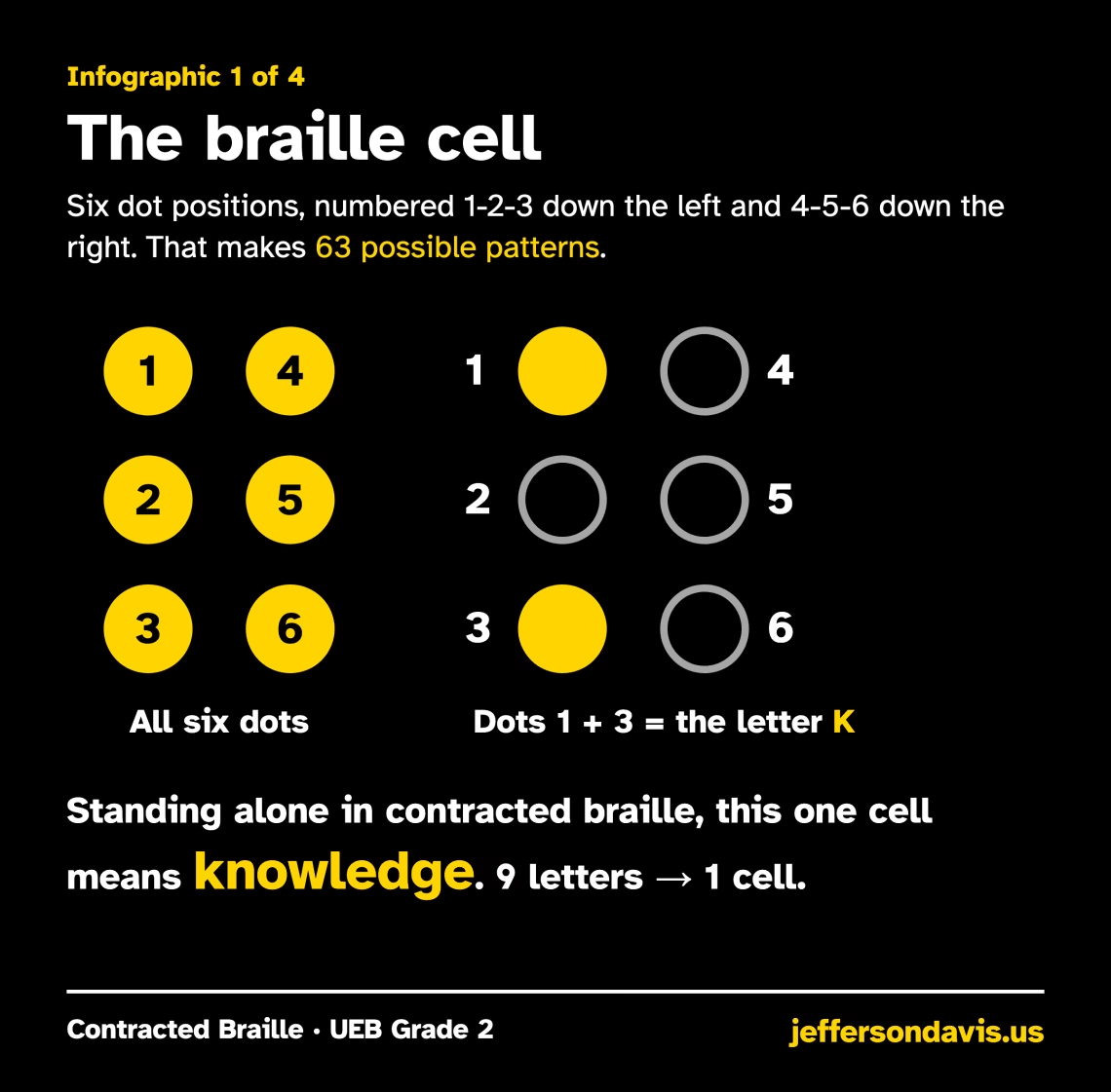
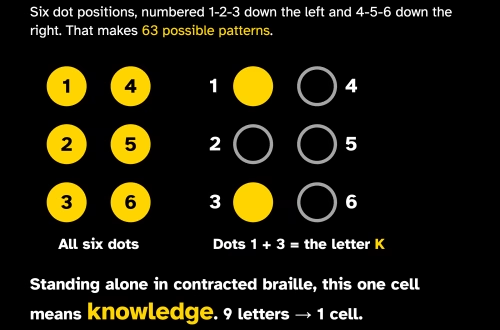
Learn how contracted braille (UEB Grade 2) works in under 90 seconds. This high-contrast video and four infographics explain the braille cell, the main types of contractions, and the U.S. switch to Unified English Braille. Made for braille learners, parents, and teachers.
-
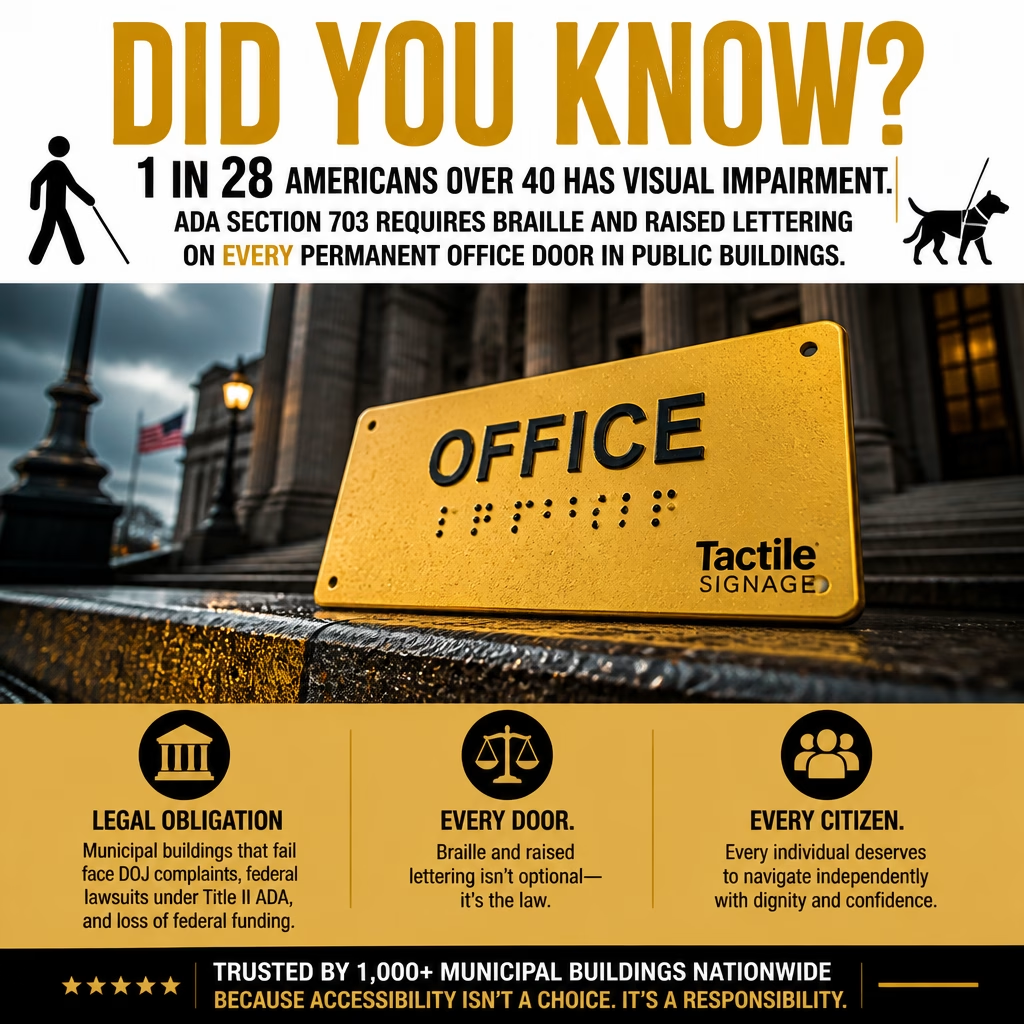
Why Every Office Door in City Hall Must Have Raised Lettering and Braille: ADA Signage Requirements for Municipal Public Buildings
Imagine arriving at your city's municipal building to pay a utility bill, apply for a permit, or attend City Council meetings and having no way to know which door leads where. No readable signs. No way to distinguish the Tax Assessor's office from the City Clerk's office from a utility closet. This is why we have the ADA, to ensure that our rights are not infringed upon.
-
Understanding ADA Compliance vs. Accessibility
When people talk about the Americans with Disabilities Act (ADA), they often assume that “compliant” automatically means “accessible.” It doesn’t. In fact, the gap between those two ideas is where many disabled people run into the most frustrating and sometimes dangerous experiences. ADA compliance is about meeting the minimum legal requirements. It’s a checklist: Are there braille room signs? Are doorways wide enough? Is there a ramp? ADA accessibility, on the other hand, is about whether a space is actually usable in the real world by people with disabilities. It’s not just “Did you install the sign?”, it’s “Does this space work for someone navigating it independently?”. That distinction might…